
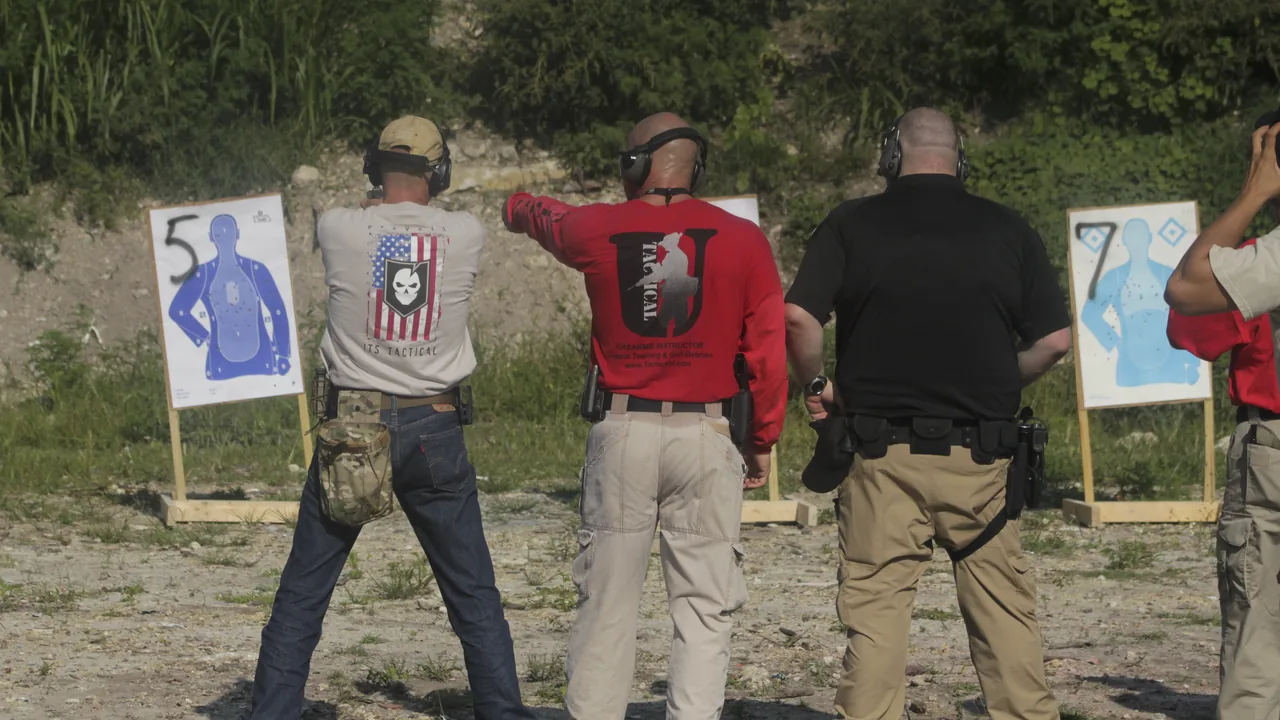
Why Tactical U training is different
The Tactical U Standard
Capability is the goal, not just completion.
The standard explains what training is meant to build, how the six rungs connect, and when a visitor should move from understanding the system to choosing a course.
5.0 Google rating354 five-star Google reviewsTHE TACTICAL U STANDARD
Every skill is judged by one question: can you still reach it when the conditions stop cooperating.
That question decides what is taught here, the order it is taught in, and when a student is ready to move up a rung.
A training standard with a clear job
This page is the explanation and qualification layer for Tactical U. It is not a second course directory. The South Florida course hub owns course discovery. This page explains why the system is structured the way it is, who it fits, and what a serious visitor should expect before choosing a course.
What the standard measures
A calm range and a clean repetition are useful starting points. They are not the full test. Tactical U introduces pressure, uncertainty, movement, equipment failure, and consequence in an order that protects the foundation instead of pretending every student starts at the top.
Certificate
A certificate records attendance and a stated requirement on a stated date. It does that administrative job honestly.
Capability
Capability asks whether the person can still reach the skill when the conditions stop cooperating. The two should never be confused.
The six rungs, foundation to pressure
The rungs are an explanatory ladder, not a catalog. Each one assumes the one below it is solid. The course hub is where the current training options and routes live.
Foundation
Safe, consistent handling and the basic habits that make later work possible.
Discipline
One platform run correctly to a measurable standard, with coaching that catches the actual error.
Application
Failures, light, distance, and changing conditions enter the problem without losing the safety foundation.
Fighting
Distance closes, decisions get harder, and another person or movement changes the problem.
Environment
The vehicle, building, outdoor space, or other setting changes what the skill requires.
Pressure
The situation stops cooperating and the student still has to make a sound decision and reach the skill.
Who this fits
This is for responsible civilians, professionals, corporate teams, and select law enforcement or military units whose decisions carry real personal, family, operational, financial, or legal consequences. It is a poor fit for someone who wants only the fastest possible route to a piece of paper. That is a legitimate goal, but it is not the job of this page or this training system.
Classes are private or small group because the instructor has to see the mistake, correct it, and manage the safety envelope while the student is working. That is a training requirement, not a scarcity slogan.
Who teaches to this standard
Stephen L. Cohen is the founder and lead instructor, with more than 32 years in law enforcement at senior operational level, including SWAT, federal task-force work, and dignitary protection. He is an NRA Law Enforcement Certified Firearms Instructor across multiple disciplines, holds Florida Firearms Instructor Licence K-1000028, and operates under NRA Affiliated Agency #Z86174. Read Stephen’s full background or read the student review record.
Choose the right next step
If the system makes sense, use the existing South Florida course hub to see the current training paths. If you are not sure where you fit, speak with Stephen before choosing.
See the South Florida course system Talk With Stephen First