
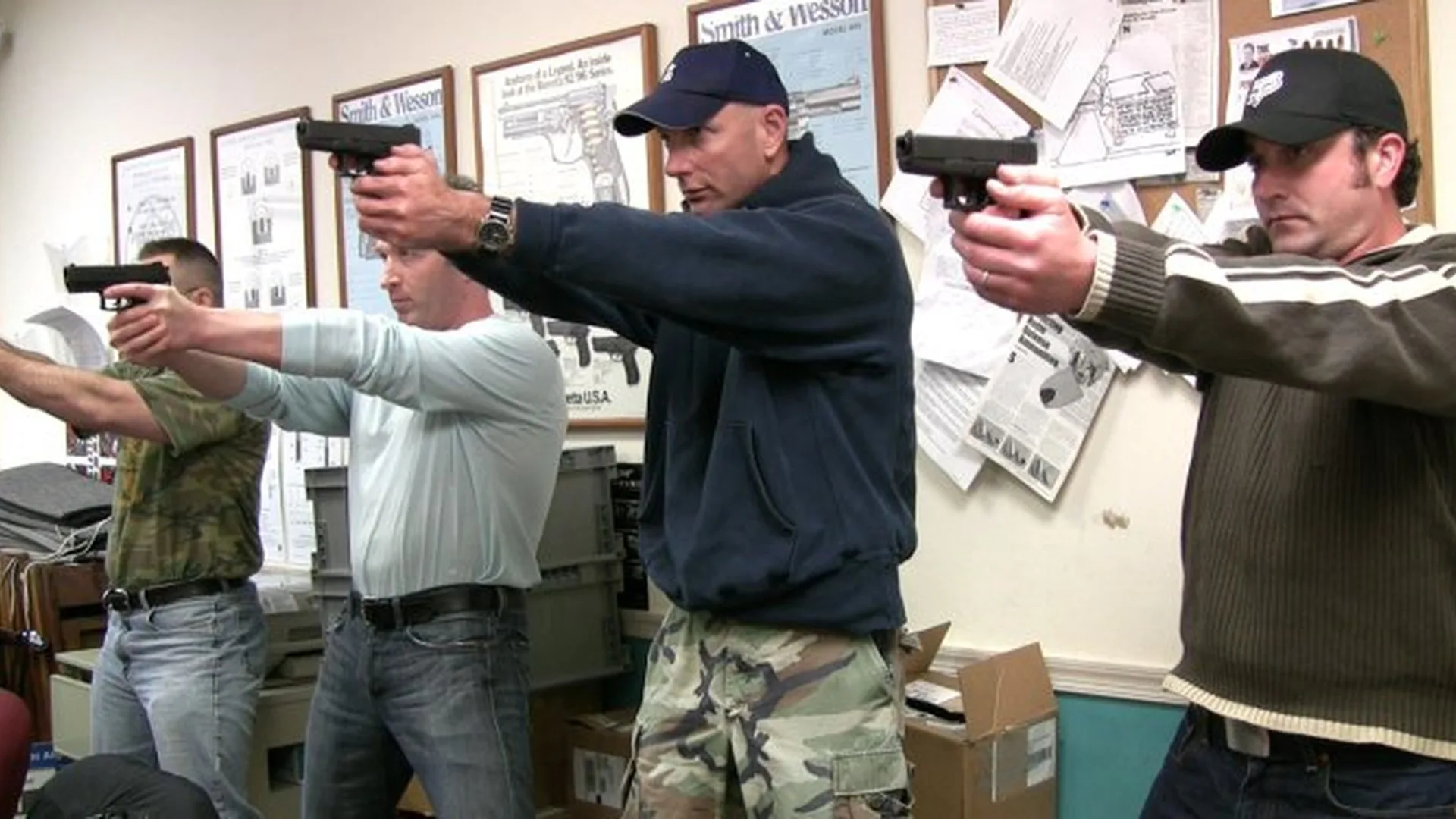
On July 1, 2026, Florida’s Security Services at Places of Worship law (CS/SB 52, Chapter 2026-46) took effect. It passed almost unanimously, and it changes when Chapter 493 private-security licensing applies to a qualifying uncompensated armed-security volunteer at a place of worship.
Most of the coverage has treated it as good news or bad news. It is neither. It is permission, and permission is not protection.
If you lead a church, synagogue, mosque, or any house of worship in Miami, Fort Lauderdale, or anywhere in Broward, Miami-Dade, or Palm Beach County, here is what the law actually did, and the far more important question of what you do now that nobody is going to answer for you.
What changed on July 1
Florida Chapter 493 regulates private security work. SB 52 created a new exemption from that licensing for armed volunteer security at places of worship.
The enacted law is one sentence. It exempts a person from Chapter 493 licensing when that person:
- Acts on a voluntary basis.
- Receives no compensation for the security services.
- Provides armed security on the premises of a church, mosque, synagogue, or other place of worship.
That is the entire exemption.
What the law does not do, and this is the part the coverage missed
The enacted exemption does not require a Florida concealed weapon license, sheriff-approved security plan, level 2 background screening, or training. The first three conditions appeared in filed SB 52 and were removed before passage. Training was not a condition in either the filed or enacted bill.
| Issue | What the official record shows |
|---|---|
| Sheriff-approved armed security plan | Proposed in the filed bill, absent from the enacted law |
| Level 2 background screening | Proposed in the filed bill, absent from the enacted law |
| Valid Florida concealed weapon or firearm license | Proposed in the filed bill, absent from the enacted law |
| Express premises definition | Proposed in the filed bill, absent from the enacted law |
| Training requirement | Not included in the filed or enacted bill |
| Voluntary basis and without compensation | Remains in the enacted law |
| Training-expense reimbursement exception | Proposed in the filed bill, absent from the enacted law |
Read that table again, because most of what you have seen online is wrong about it. Several outlets and at least one national carry publication are still telling readers a concealed weapon license or a background check is required. It is not. They are describing a bill that did not become law.
The statute creates no added use-of-force defense and no civil liability shield. It changes one Chapter 493 licensing rule. It does not replace other firearm, carry, use-of-force, property, school, or liability law.
Official Florida law sources
Read the enacted law, not the filed bill
The final law is one sentence. Chapter 2026-46, Laws of Florida, exempts a person from Chapter 493 when that person acts voluntarily, receives no compensation, and provides armed security on the premises of a place of worship. It took effect July 1, 2026.
The removed conditions are not a matter of interpretation. They are visible in the official legislative record:
- Chapter 2026-46, Laws of Florida, the law signed by the Governor
- Enrolled CS/SB 52, the final bill sent for approval
- SB 52 as originally filed, including the proposed sheriff plan, background screening, concealed weapon license, premises, and compensation conditions
- Criminal Justice Committee Amendment 596732, which deleted filed lines 20 through 35
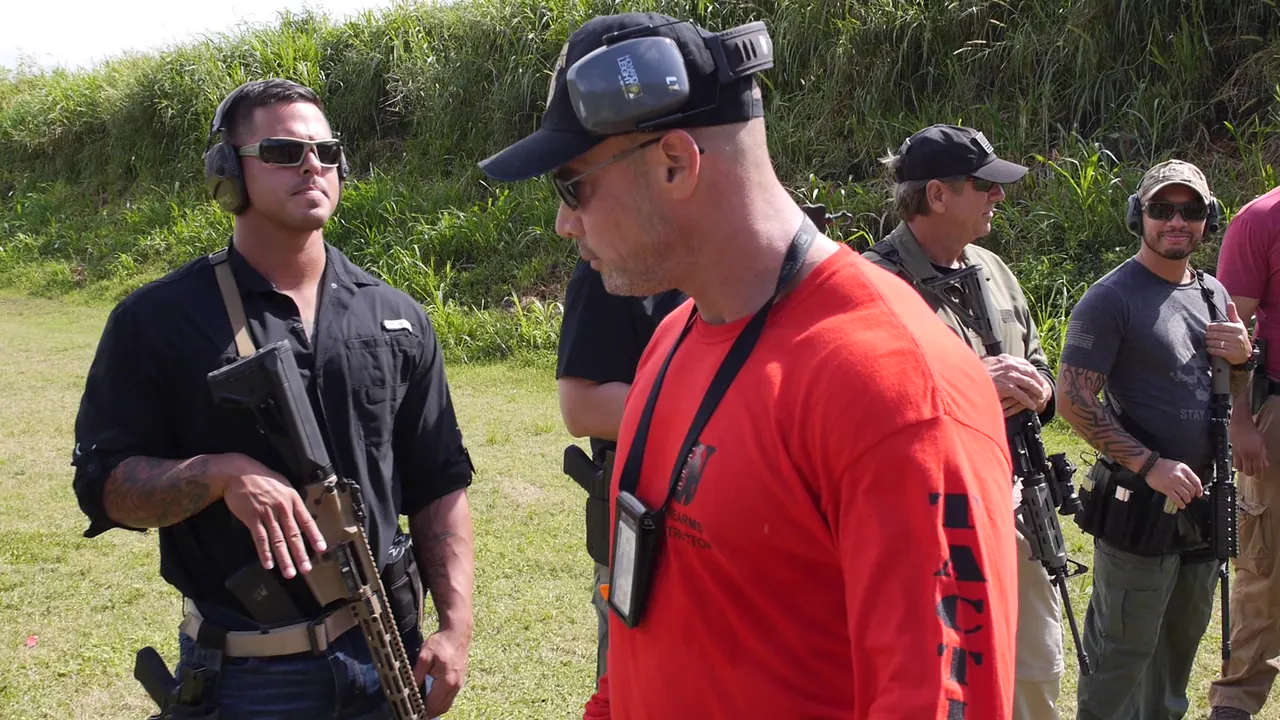
Training should still be required. Just not by the state.
Let me be direct about my position, because there is no point being coy about it.
The enacted law includes no training requirement. Every congregation in Florida using armed volunteers should impose one on itself anyway.
Not because a law says so. Because the person you are asking to stand armed in a room full of your members, including children, is going to be judged on what they do in a few seconds under the worst stress of their life. That performance does not come from good intentions or from a permit. It comes from training, and from training repeated often enough that it holds when the person’s hands are shaking.
The same goes for screening. Filed SB 52 proposed a level 2 background screening. The enacted law does not require one. Keep screening as an organizational standard. You are handing someone authority over life and death inside your own building. Knowing who they are is the minimum, not an insult.
A congregation that says “the law does not require it, so we do not do it” has made a decision. It should understand that it made one, and that it will be asked about it later by its attorney, its insurer, and its own members.
Why that should worry you more than it relieves you
Here is what I have watched happen for 32 years, most of it at the operational end of law enforcement: people confuse being armed with being prepared. They are not the same thing, and the gap between them is where people get hurt.
A firearm on a volunteer’s hip is not a security plan. It is a tool, and a tool with no plan behind it is a false sense of security. It makes leadership feel covered. It makes the congregation feel protected. It changes almost nothing about what actually happens when a threat appears.
Consider what that volunteer may have to do in seconds. Identify the threat correctly, in a crowded room, with children present. Decide whether to move, cover, or shoot. Account for the fifty people between them and the target. Communicate with the two other volunteers on the team without shooting each other. Then remain identifiable as a good guy when deputies come through the door and see an armed man standing over someone.
None of that is a marksmanship problem. All of it is a plan problem, and a plan you have not rehearsed is not a plan, it is a wish.
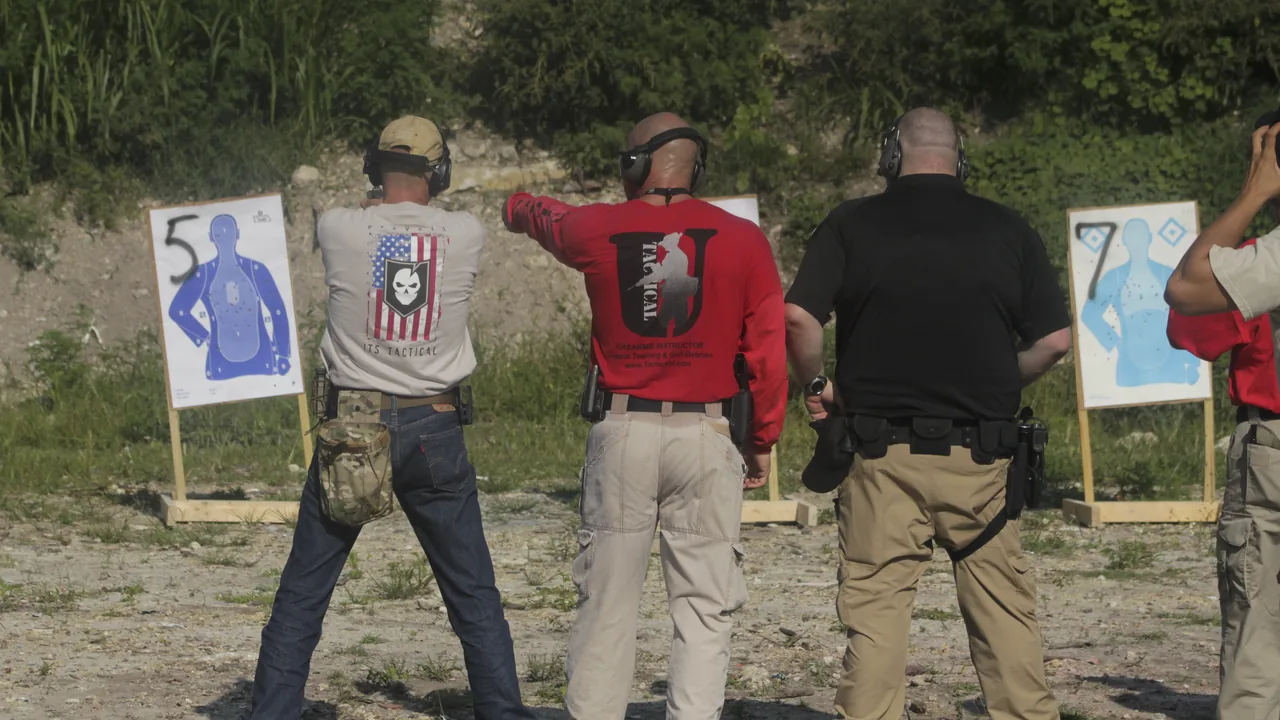
An action plan, rehearsed regularly by the congregants who volunteer to serve, matters more than any gun on anybody’s hip.
The law just told you the state will not require that plan. That does not mean you do not need it. It means you are the only one who is going to build it.
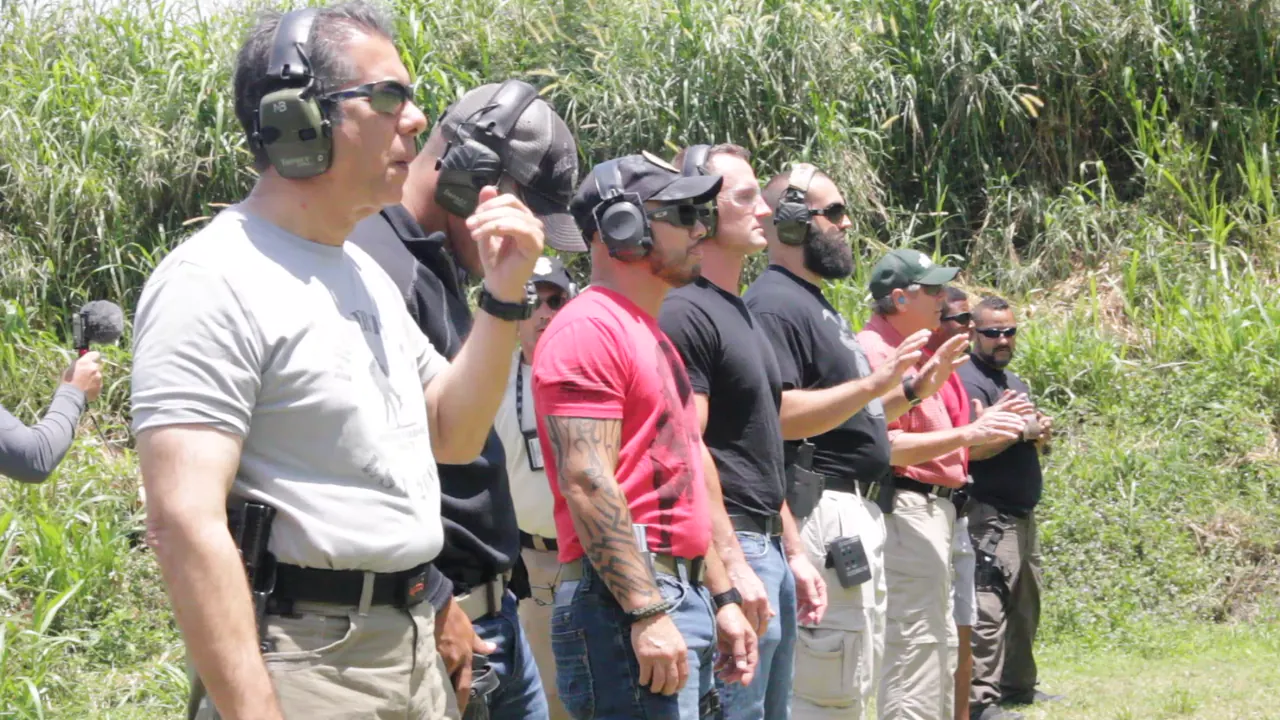
What a real team looks like
There is no mystery to this. It is the same structure protective details have used for decades, scaled to a sanctuary.
The nearest existing Tactical U service is a home defense and hardpoint assessment, applied to a facility rather than a house.
Selection. Not everyone who wants to serve should. Willingness is not qualification. Somebody has to be able to say no, and that has to be decided before anyone volunteers, not after.
Screening. The enacted law does not require it. Keep screening as an organizational standard. Know who you are handing this responsibility to.
Standards. Written, specific, and tied to a demonstrated skill, not a certificate someone got once. What must a team member be able to do, under time, under stress, with people around them?
Roles. Who watches the door, who watches the room, who moves toward a problem, who moves people away from it. If everyone’s plan is to run toward the noise, you have no plan.
Communication. How the team talks to each other, how it identifies itself, and how it reaches 911 without three people calling at once and nobody giving an address.
Medical. Severe bleeding can become fatal quickly. A security plan should include trauma equipment, trained medical responders, and a clear handoff to EMS, not only armed response.
Law enforcement coordination. Responding deputies do not know your volunteers. Decide now how your people become instantly identifiable as friendly, or you have created a second tragedy.
Rehearsal. All of the above, practiced on a schedule, with the actual people, in the actual building. Not discussed. Rehearsed. A capability that cannot be performed under stress does not exist.
Documentation. Every one of the decisions above, written down. If the worst day comes, your attorney and your insurer will ask what standard you set and whether you followed it. “The law did not require it” is not a defense anyone wants to give.
What a strategic church security SOP actually contains
A strategic standard operating procedure is not a generic active-shooter checklist. Tactical U starts with a pre-assessment intake and an on-site survey because the building determines the tactics.
The written form of this is the institutional risk-control standard, which is what an SOP is supposed to be.
The survey examines approach routes, access points, door discipline, sight lines, blind spots, chokepoints, hard and soft backstops, crowd movement, children’s areas, medical resources, communications, and the team’s current structure. The written SOP is then authored for that congregation, that facility, and those services.
A facility-specific strategic SOP defines:
- Mission, guiding principles, roles, command structure, and authority.
- Layered zones, post assignments, fields of view, relief plans, and crossfire prevention.
- Access control, behavioral threat indicators, verbal engagement, and graduated posture levels.
- Incident response, evacuation, shelter-in-place, family reunification, and medical response.
- Law enforcement and EMS liaison, friendly identification, arrival procedures, and post-incident actions.
- After-action documentation, review cycles, printable assignments, checklists, and reporting forms.
The finished work product can include an executive findings report, a facility-specific SOP, a tactical geography package, a law enforcement and EMS liaison package, an implementation workbook, a leadership briefing, and a training plan scoped to the findings. The assessment and strategic SOP are conducted and authored personally by Stephen L. Cohen.
Tactical U recently prepared this exact assessment and strategic SOP scope for a South Florida congregation. Client identities are kept private. The method is not. The assessment comes first, the SOP turns findings into policy, and training and rehearsal prove whether the policy can be performed under stress.
Discuss a house of worship assessment and strategic SOP.
The questions your leadership should ask this month
- Is every volunteer legally permitted to possess and carry the firearm in the exact circumstances involved?
- What screening and reference checks will we require, given the state requires none?
- What initial and recurring training, live-fire qualification, judgment standards, and medical skills will we require?
- Who approves membership, writes policy, supervises the team, and removes someone who no longer meets the standard?
- How does the team communicate, identify itself, and respond when deputies arrive and see armed people inside?
- When did we last rehearse it, with the actual team, in this building?
- Have our attorney and insurer reviewed the plan, the standard, and the documentation?
If question 6 has no answer, that is the honest state of your security program regardless of how many people are armed on Sunday.
If your leadership cannot answer these, talk to Stephen L. Cohen directly before you arm a volunteer.
What this means for South Florida congregations
Across Miami-Dade, Broward, and Palm Beach counties, congregations have been standing up volunteer security teams for years, many funded through federal nonprofit security grants. SB 52 removed one Chapter 493 licensing barrier for qualifying uncompensated volunteers. It did not answer a single operational question.
Tactical U performs on-site facility assessments and builds and trains house-of-worship security teams throughout South Florida, for churches and synagogues alike. We look at your building, your services, your entrances, your people, and your realistic response, and we tell you the truth about where you stand.
I spent 32 years in law enforcement, including SWAT, a federal task force, and dignitary protection details. I am an NRA Law Enforcement Certified Firearms Instructor and an approved training vendor for the Federal Reserve Police. I have built protective operations around people who were actually being hunted, and the lesson every one of those details taught is the same: the plan is the protection. The firearm is only one tool inside it.
If your congregation is deciding what this law means for you, start with a conversation.
This article is general information, not legal advice. Consult your organization’s attorney about how SB 52 applies to your congregation.
About the author: Stephen L. Cohen is the founder of Tactical U Firearms Training, serving Miami, Fort Lauderdale, and all of South Florida. 32 years in law enforcement, NRA Law Enforcement Certified Firearms Instructor, approved training vendor for the Federal Reserve Police, and author of eight books on defensive incident survival and defensible operations.
Florida Church Security Law FAQ
Can church volunteers carry guns in Florida now?
Not automatically. SB 52 adds a Chapter 493 licensing exemption for a person who voluntarily and without compensation provides armed security on worship premises. It does not override separate laws governing possession, carry, use of force, schools, property rights, or other legal restrictions.
Do church security volunteers in Florida need any training?
SB 52 itself requires none. That is exactly why training and rehearsal are now the congregation’s responsibility. Being armed is not the same as being prepared.
Does SB 52 require a concealed weapon license, sheriff plan, or background check?
No. Those conditions are absent from enacted Chapter 2026-46. The sheriff plan, level 2 screening, and Florida concealed weapon or firearm license appeared in filed SB 52 and were removed before passage. The filed bill did not include a training requirement.
Does SB 52 apply to paid church security?
This new subsection does not apply when the person is compensated. Other Chapter 493 provisions and exemptions may still apply.
Does SB 52 require a house of worship to allow armed volunteers?
No. SB 52 does not require any house of worship to use or allow an armed volunteer. Leadership should set firearm and property policy with its attorney and insurer.
What is the first thing our congregation should do?
Write down your plan and rehearse it with the people who will actually execute it. A team without a rehearsed plan is not a security team, regardless of what anyone is carrying.
Where can I read Florida’s enacted church security law?
Read Chapter 2026-46, Laws of Florida, and the enrolled CS/SB 52 for the final language. Compare them with the originally filed bill and Criminal Justice Committee Amendment 596732, which deleted the proposed conditions.
What does a strategic church security SOP include?
A facility-specific strategic SOP defines roles and command, layered zones, post assignments, access control, fields of view and crossfire prevention, posture levels, evacuation and shelter procedures, medical response, law enforcement and EMS arrival, post-incident actions, documentation, and the review cycle. Tactical U writes it after an on-site assessment so it fits the actual building and team.
Teams that want hands-on training can start with our concealed carry class in Fort Lauderdale, or contact Tactical U about training for a house of worship.
Train This Skill With Tactical U
Turn the idea from this article into coached reps with Tactical U.