Context Summary
Competence, Compliance, and Risk Controls in the Highest-Exposure Environment
School zones are where “I’m technically allowed” turns into “I’m technically charged.” Florida law, federal law, school policy, and officer discretion overlap in a way that punishes casual assumptions.
This guide defines the legal layers, the operational traps, and the risk controls that keep responsible armed adults from creating a felony case out of a routine drop-off.
A reduced charge is still a case, still a lawyer, and still a record, which is the same lesson as the legal aftermath of a defensive shooting.
Definitions (Use These, Not Vibes)
Federal “School Zone”
Under federal law, a “school zone” includes:
On the grounds of a public, parochial, or private K-12 school
Within 1,000 feet of those grounds
18 U.S.C. § 921 (definitions):
Federal Gun-Free School Zones Rule (18 U.S.C. § 922(q))
Federal law includes a school-zone possession prohibition and enumerated exceptions.
Florida “School Property / School Event / School Bus / Bus Stop”
Florida law prohibits possession of firearms and other weapons:
On the property of any school
At a school-sponsored event
On a school bus or at a school bus stop (with limited exceptions)
“Securely Encased” (Florida statutory definition)
“Securely encased” means:
In a glove compartment (locked or unlocked)
Snapped in a holster
In a gun case (locked or unlocked)
In a zippered gun case
In a closed box/container requiring a lid/cover to open
Private Conveyance Rule (Florida vehicle framework)
Florida’s private conveyance language is where many “vehicle carry vs. on-person carry” misunderstandings come from. It explicitly states the private conveyance authorization does not allow carrying the handgun on the person under that pathway.
Risk control is a habit, not a memory test, and it is drilled in concealed carry handgun tactics and carry decisions.
The Two-Layer Problem Most People Miss

Most people analyze school zones as if Florida law is the whole universe. It is not.
Layer 1: Federal Gun-Free School Zones Act
Federal law generally prohibits knowingly possessing a firearm in a school zone, with exceptions. One major exception is structured around being licensed by the state where the school zone is located, with law-enforcement verification baked into that licensing framework.
Operational takeaway: Florida’s permitless carry environment did not erase the federal “licensed” carve-out. If you carry without a Florida CWFL, you are choosing exposure in the exact place prosecutors like most.
Layer 2: Florida’s School Property Prohibition
Florida prohibits possession on school property, with a narrow vehicle-storage pathway tied to “securely encased” and “not in manual possession.”
Operational takeaway: Even if something sounds “allowed,” school property is a venue where “allowed” can still become “charged,” especially when your setup looks like carry, not storage.
The license does not exempt you from the school-zone rules, but Florida concealed weapon license training is where these boundaries actually get taught.
The Core Florida Rule: Storage in Vehicle Is Not Carry on Campus
Florida’s vehicle concept is built around possession inside a conveyance, not carry on your person.
Florida’s private conveyance rule allows possession inside a vehicle if the handgun is securely encased or otherwise not readily accessible, and it explicitly says that authorization does not allow carrying the handgun on the person under that pathway.
Operational takeaway: If it is attached to your body, you have created the facts of “carry,” not “stored in vehicle.” That distinction matters more on school property than almost anywhere else.
The School Property Vehicle Exception (What It Is and What It Is Not)
Florida allows a person to possess a firearm on school property only in a specific configuration tied to vehicle storage:
Inside a vehicle
Firearm is “securely encased”
Firearm is not in manual possession
This is designed to allow lawful vehicle storage, not to create an on-campus carry workaround.
The “Manual Possession” Trap
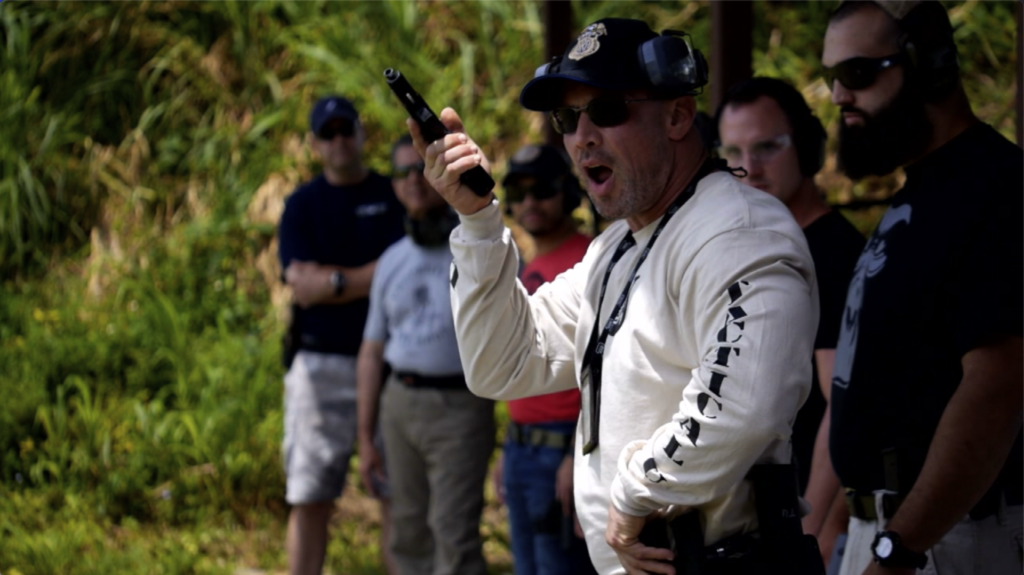
Florida’s school property exception is not a generic “concealed means legal” rule. It is a storage rule with a handling prohibition.
Risk control: On school property, treat “handling, adjusting, checking, moving” as behavior that creates probable cause and turns storage into a criminal narrative.
The Permitted-Carry Trap: “Reduced Charge” Is Still a Charge
Florida includes a provision that reduces certain school-property weapons violations to a second-degree misdemeanor for a person who is authorized to carry concealed under Florida’s 790.01(1).
Two points matter:
That is not immunity. It is still an arrestable, prosecutable offense.
“Reduced” does not mean “safe” when your objective is staying out of the system entirely.
Operational takeaway: Your standard is not “What is the minimum penalty?” Your standard is “How do I avoid giving the state a clean case?”
A reduced charge is still a case, still a lawyer, and still a record, which is the same lesson as the legal aftermath of a defensive shooting.
Scenario Reality: Where “Good Advice” Breaks
Scenario 1: Parent Drop-Off
You pull into the school drive with a handgun in a holster on your belt under a shirt. You have created a situation where:
The campus prohibition is triggered (school property)
The vehicle exception is harder to claim because your gun is not being stored in the vehicle system, it is being worn
Your intent becomes irrelevant once the facts look like carry
Scenario 2: You Exit the Vehicle
Even people who understand “store it in the car” blow it by stepping out to walk a child to the door.
Operational rule: If you exit the vehicle on school property, you have changed the fact pattern. Do not pretend you are still operating under a vehicle storage exception.
Scenario 3: The “Hero Problem”
If violence erupts and you retrieve a firearm from vehicle storage on school property, your actions may be argued as:
A deliberate escalation
A voluntary entry into a gunfight
A choice that creates prosecutable conduct separate from any self-defense claim
Florida has language addressing discharge in self-defense in the school context, but that does not automatically erase exposure created by possession and handling on school grounds.
F.S. 790.115 reference:
Operational takeaway: You can be morally right and still spend years and life savings proving it.
Risk Controls (The Unprosecutable Approach)

Risk Control 1: Decide Your Federal Exposure Before You Drive
If you do not have a Florida CWFL, understand what you are choosing inside 1,000 feet of K-12 school grounds under federal law.
Risk Control 2: Disarm Before the Turn-In
Before you enter school property:
Move the firearm off-body
Place it in a vehicle storage configuration consistent with “securely encased”
Do it before cameras, staff, and traffic compression remove privacy and create witnesses
Risk Control 3: Hands-Off Discipline on Campus
Once on school property:
No adjustment
No checking
No moving
No “let me just…”
The gun becomes a fixed stored object until you are off school property.
Risk Control 4: Do Not Exit the Vehicle Armed
If your plan requires you to step out, your plan must be “unarmed on campus.” Anything else is a self-authored case.
Risk Control 5: Separate Preparedness From Fantasy
If your plan for an active killer event is “I’ll gear up in the pick-up line,” you are planning to create legal exposure under cameras, witnesses, and panic. Preparedness is allowed. Sloppy hero scripting is expensive.
Risk control is a habit, not a memory test, and it is drilled in concealed carry handgun tactics and carry decisions.
Misconceptions (Correct Them Permanently)
“If it’s concealed, it’s legal.”
Concealment does not override school property restrictions.
“Securely encased means I can wear it if it’s snapped.”
“Securely encased” is a definition, not a permission slip, and “on the person” is treated as a problem inside Florida’s vehicle-carry framework.
“Permitless carry means I’m fine in school zones.”
Federal law’s key exception is license-based.
“Worst case it’s just a misunderstanding.”
School property is not a warning venue. It is a charge venue.
Frequently Asked Questions
What counts as a “school zone” federally?
On K-12 grounds and within 1,000 feet of those grounds.
18 U.S.C. § 921:Does a Florida CWFL matter for federal school zones?
Federal law’s exception is structured around being licensed by the state where the school zone exists.
18 U.S.C. § 922(q):Can I have a firearm in my car on school property in Florida?
Florida’s exception is narrow and tied to being securely encased and not in manual possession.
F.S. 790.115:What does “securely encased” mean in Florida?
If it’s snapped in a holster, can it be on my belt?
Do not treat “snapped holster” as “safe on body” on school property. Florida’s vehicle rule distinguishes conveyance possession from carry on the person.
F.S. 790.25:If I’m authorized to carry, am I immune on school property?
No. A reduced-charge pathway is still a criminal pathway.
F.S. 790.115:Does Florida law treat school buses and bus stops differently?
Yes. The statute explicitly covers school buses and school bus stops.
F.S. 790.115:Are private schools included?
Federal “school zone” includes public, parochial, and private K-12 schools.
18 U.S.C. § 921:Does this apply to colleges and universities?
Federal “school zone” is tied to elementary and secondary schools as determined under state law. Verify higher education separately.
Quick Reference Guide

Continued Reading
Related Articles:
Training Path (Programs):
Because the federal school-zone exception is license-based, start with Tactical U’s Florida CWL guide and grouped South Florida training areas.
About The Author

Stephen L. Cohen
Founder & Lead Instructor, Tactical U Firearms Training
Operating in South Florida since 2010, Stephen L. Cohen is a law-enforcement-certified firearms instructor with over 32 years of experience training law enforcement, military, security professionals, and responsible armed civilians. His instruction emphasizes technical weapon handling, decision-making under stress, articulation, and accountability, with a focus on performance, control, and consequence management under real-world conditions.
Instructor Bio & Credentials:
Train This Skill With Tactical U
Turn the idea from this article into coached reps with Tactical U.