Key Takeaways: (Safety Under Reality)
At Tactical U, safety is not measured by compliance on a square range.
It is measured by outcomes under stress.
The Tactical U Standard requires that safety discipline:
- Survives physiological stress
- Persists during movement and malfunctions
- Holds during contact and weapon retention
- Accounts for third-party risk
- Transitions cleanly to law enforcement control
Training that only works when calm is false safety.
Dynamic Safety Discipline exists because real violence compresses time, destroys fine motor control, narrows cognition, and punishes administrative mistakes without mercy. If safety collapses under stress, it was never discipline,it was compliance theater.
The Gap: When the Four Rules Collapse
The Four Rules are foundational, and incomplete when treated as static instructions.
In real violence:
- Heart rate >160 BPM
- Tunnel vision narrows cognition
- Hands lose dexterity
- Memory collapses
- Survival overrides procedure
If safety discipline is not hardwired, it fails.
Dynamic Safety Discipline embeds the rules so deeply they operate when conscious thought degrades.
The Four Rules Under Stress

Rule 1 Failure Under Stress: The Loaded Gun Problem
Static Rule: Treat every firearm as if it is loaded.
Dynamic Reality: Under adrenaline, memory and certainty collapse.
Breakdowns include:
- Losing track of chamber status
- Assuming safety position instead of confirming
- Treating the weapon like a prop after malfunction
Neurological Reality:
You default to automation. You do not rise to the occasion, you fall to the level of your training.
Discipline:
- Chamber checks are habitual, not occasional
- Status is confirmed by physical contact, not assumption
- Weapon is treated as loaded until personally verified
- Spoken status with partners
If you cannot confirm status under stress, you are operating on luck, and luck is negligence waiting for a witness.
Rule 2 Failure: Muzzle Control in Motion
Static Rule: Always point the firearm in a safe direction.
Dynamic Reality: Under threat fixation, “safe direction” disappears.
Failures include:
- Sweeping family during pivots
- Muzzling partners in lateral movement
- Sweeping your own legs or support arm
- Losing the backstop as the environment moves
The moment an innocent enters the line of fire:
- Your tactical opportunity ends
- Your legal justification collapses
- Your duty becomes repositioning or disengagement
Skill does not override backstop responsibility. Judgment does.
Rule 3 Failure: Trigger Discipline During Mechanical Tasks
Static Rule: Keep your finger off the trigger until you intend to fire.
Dynamic Reality: Rule 3 fails most often when shooters are not shooting.
Violations appear during:
- Malfunction clearance
- Reloads
- Administrative handling
- Stress-induced multitasking
Sympathetic Clench Contingency
During explosive movement or imbalance, the nervous system may involuntarily contract the entire hand.
If training depth is insufficient, indexing under the trigger guard can be a temporary failsafe to prevent a negligent discharge.
Not ideal.
Defensive, not offensive.
A last resort, not a standard.
Discipline:
Index violently high on the frame during non-firing actions.
Anything less is negligence under stress.
Rule 4 Failure: Target, Backstop, and Beyond in a Moving World
Static Rule: Be sure of your target and what’s beyond it.
Dynamic Reality: Backstops shift every second in real violence.
Rounds go through drywall, furniture, vehicles, glass.
Tunnel vision does not absolve liability.
You can be righteous and still be charged or sued if an innocent is hit.
Discipline:
- Do not shoot through unknowns
- If you lose the backstop, the shot is over
- “No shot” is tactical maturity, not hesitation
- Skill without restraint is reckless
Catastrophic Failures

Sympathetic Clench
Tripped by falls, impacts, startle, balance loss.
If the finger is near the trigger, the gun will fire.
You do not get a vote.
Train distance between finger and trigger.
Proximity is liability.
Self-Muzzling in Urgency
Common collapses:
- Racking slide too close to chest
- Sprinting to cover and sweeping thighs
- Compressing weapon inward during panic
Discipline:
- Slight extension away from body during manipulation
- Downward safe quadrant
- Support hand controls orientation
Tunnel Vision & Cognitive Collapse
Your body narrows the world to threat.
Backstops, third parties, and change vanish from awareness.
This is where “accidents” are born:
- Muzzle follows eyes, not discipline
- Trigger finger drifts during multitasking
- Missed rounds become liability
Train forced breaks in fixation.
Peripheral checks are a skill, not luck.
Gear-Induced Mechanical Doubt
Holsters collapse. Lights activate unintentionally.
Gear that demands attention destroys discipline.
If equipment needs babysitting, it is liability.
Cognitive Stall & Procedural Looping
Multiple malfunctions + information overload = freeze.
This is where people ND into walls, floors, and bystanders.
Discipline:
One cycle of correction, then change the problem.
Movement is a solution. “Fixing the gun” is not mandatory.
Post-Incident Safety, After the Shooting
You are now the armed subject.
This is the most dangerous administrative moment of the incident.
Your firearm is now evidence and perception.
Primary Decision Point
Holster if and only if:
- It can be done without muzzling yourself or another
- The threat is over
- No emergent danger (crowd, accomplices) is forming
If holstering is unsafe:
Neutral muzzle-averted ready, finger indexed, controlled.
If retaining possession creates new danger:
Retreat, create distance, call 911, seek safety.
When Police Arrive
Do NOT:
- Clear the weapon
- Rack, unload, or manipulate
- Try to hand them the firearm
- Narrate or explain events while armed
Hands visible.
Compliance first.
Manipulation last.
If You Want This Hardwired, Not Theatrical
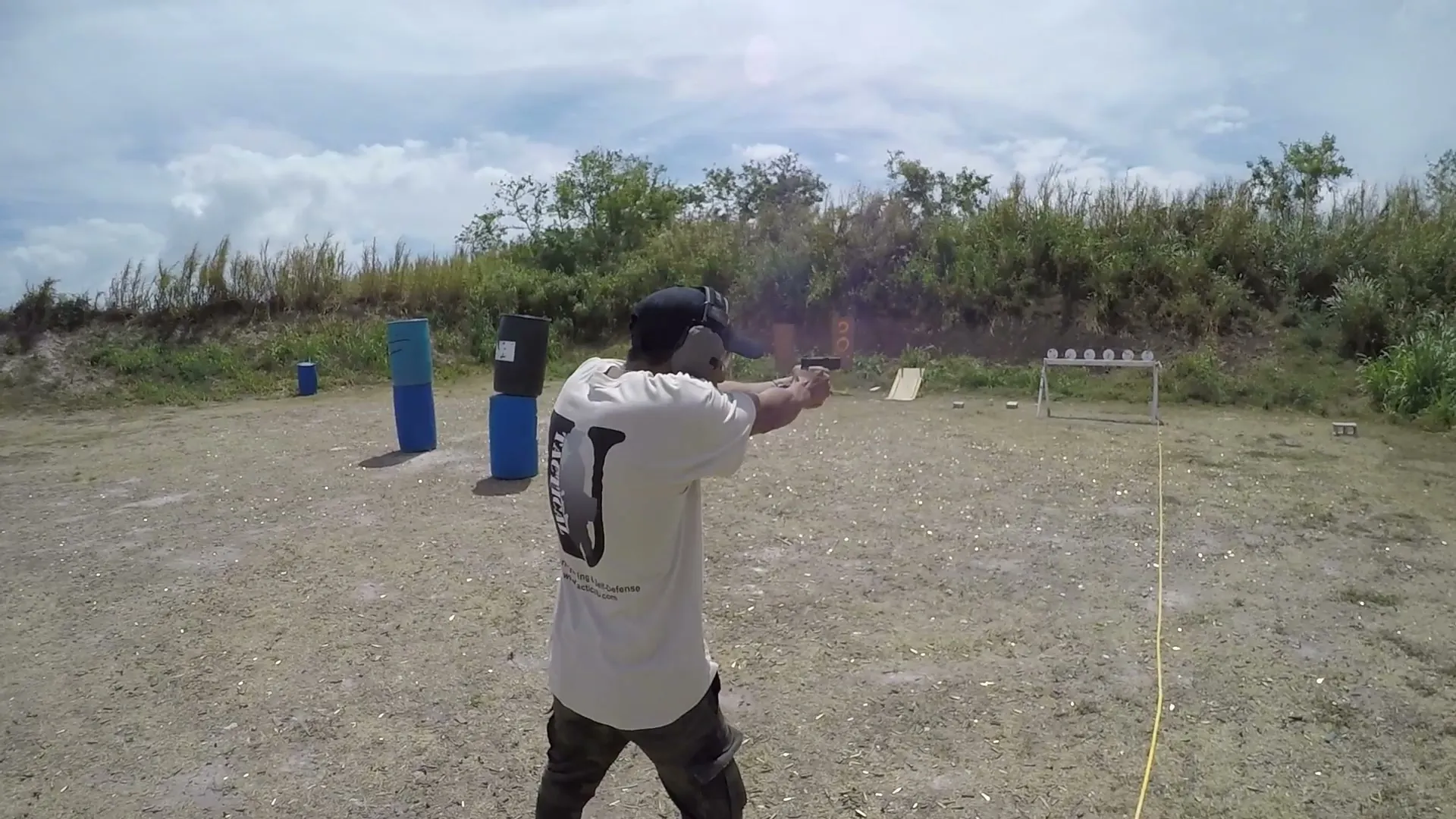
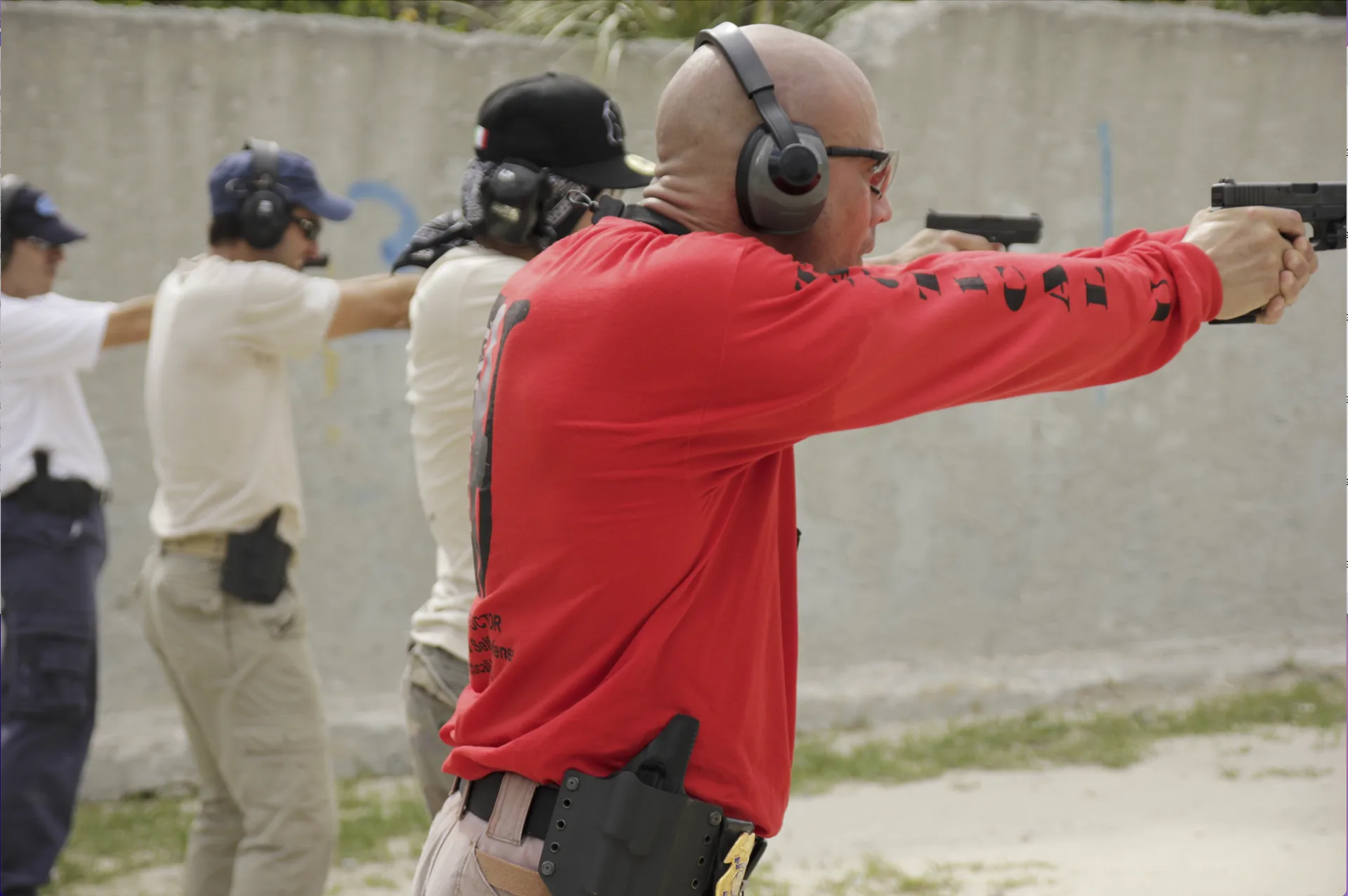
Dynamic safety cannot be learned seated, static, or online.
It must be trained under movement, confusion, and consequence.
| Training Track | Focus |
| Gunfighting 101 | Stress inoculation, dynamic manipulation, close-range decision-making |
| Vehicle Gunfighting | Seatbelt entanglements, real-world vehicle dynamics |
| Low-Light / Visual Dominance | Identification before engagement, light discipline, backstop control |
If you carry a firearm and never train dynamically, you are betting on ideal conditions that do not exist.
That is not preparedness. It is gambling.
About the Author

Stephen L. Cohen – Founder & Principal Instructor
As the driving force behind Tactical U Firearms Training, Stephen brings law enforcement-certified credentials and over three decades of hands-on instruction to every course. His extensive background includes developing training programs for law enforcement agencies, military branches, private security firms, and responsible armed citizens, with emphasis on lawful weapon handling practices, stress-informed decision protocols, and legal considerations following defensive encounters.
Based in South Florida, Tactical U Firearms Training has been delivering professional instruction since 2010.
Train This Skill With Tactical U
Turn the idea from this article into coached reps with Tactical U.