The Tactical U Standard: Marksmanship Is an Operating System
At Tactical U, marksmanship is not treated as talent, instinct, or “range skill.” It is treated as a diagnostic operating system rooted in physics, biomechanics, and repeatable human performance.
A fundamental is not something you practice until it “feels right.”
A fundamental is something executed so correctly that the system cannot fail under stress.
Whether operating a pistol or a rifle, the objective is identical:
Build a stable human platform that isolates the mechanical action of the trigger from the stability of the weapon.
When shots miss, the problem is not mystery. It is mechanics.
I. The Platform, Linear Mass Application
Weapon control begins with how the body interfaces with the ground.
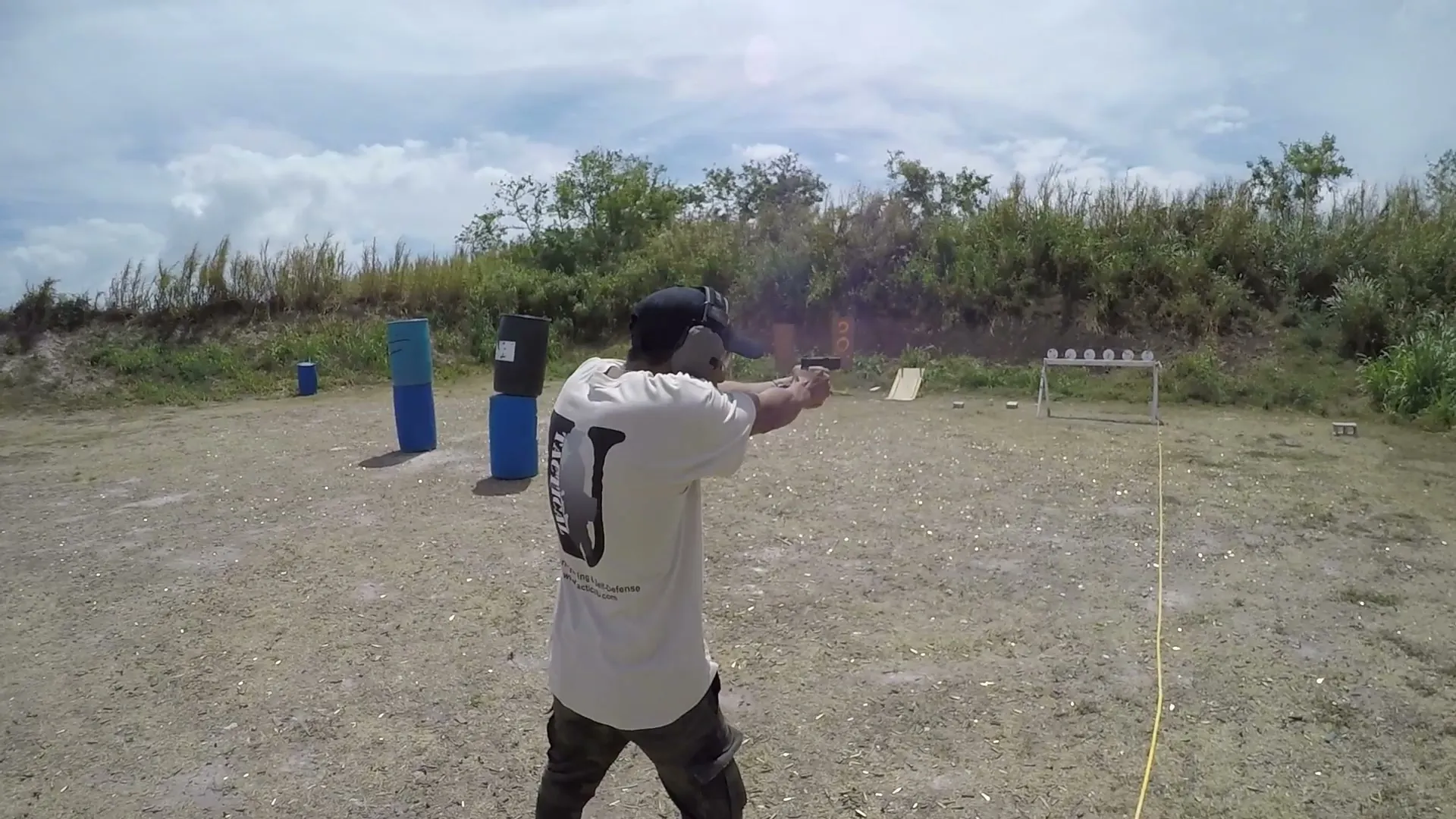
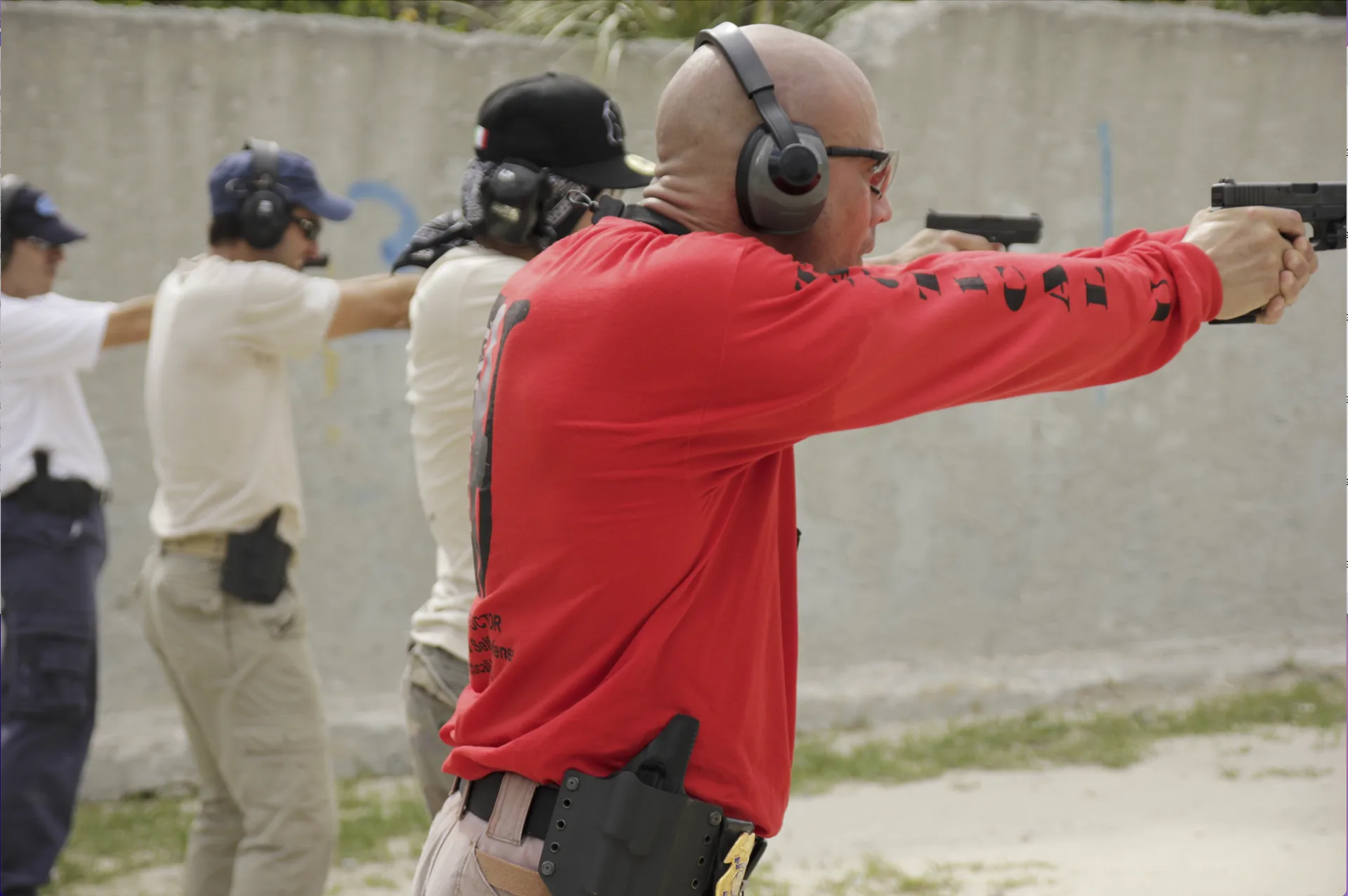
Tactical U utilizes a squared frame rather than a bladed stance.
Linear Mass Application
Aligning the hips and torso directly toward the threat allows the body’s mass to absorb recoil linearly rather than rotationally. The shooter becomes a shock absorber, not a hinge.
The Physics of the Blade
Bladed stances introduce a rotational axis through the spine. Under high-cadence fire, this creates:
- Horizontal muzzle drift
- Delayed recovery
- Inconsistent return-to-zero
This failure becomes more pronounced as recoil increases.
Aggressive Stability
A forward-biased center of gravity ($CoG$) prevents recoil-induced rocking. When weight shifts backward onto the heels, the platform destabilizes and recovery collapses.
Stability is not passive. It is imposed.
II. The Interface, Grip & Mount
The grip is the only communication pathway between the shooter and the weapon. If the interface is flawed, feedback becomes erratic and control degrades.
Pistol: The 360-Degree Vice
Tactical U employs wrist camming to mechanically lock the muzzle’s return path. By rotating the support-hand wrist forward, the shooter creates a physical stop that forces the pistol to track vertically during recoil.
The gun does not “settle.”
It is driven back into alignment.
Rifle: Deep Pectoral Seating
The rifle stock must be seated deep into the pectoral pocket, not perched on the shoulder joint.
Against a squared frame, this eliminates stock bounce, stabilizes the optic, and keeps the sight picture intact through the entire recoil arc.
III. The Visual Index, Sights & Alignment

Vision drives the gun. Misses are visual failures before they are mechanical ones.
Mathematical Bore Indexing
Bore indexing is the precise alignment of the weapon’s bore axis to the shooter’s visual line. This is geometry, not feel.
Optic Mastery
Tactical U teaches target-focus protocols for red dot optics (RDO). The shooter remains visually locked on the threat while the dot appears as a superimposed index, not a focal point.
Iron sights require front-sight focus.
Dots do not.
Mechanical Offset
Height Over Bore ($HOB$) matters at close range. Inside approximately $7$ yards, the shooter must deliberately compensate for vertical offset to achieve surgical accuracy.
Ignoring offset produces predictable misses.
IV. The Execution, Trigger Isolation
The trigger finger must function as an independent machine.
Trigger Isolation
Sympathetic grip clenching, commonly called “milking”, is the primary cause of low-left or low-right misses. The index finger must move without activating the other three fingers.
This is trained, not assumed.
Respiratory Discipline
The natural exhale pause provides a $2$-$3$ second window of maximal physiological stability. Proper breathing is a mechanical aid, not a relaxation technique.
Follow-Through
The shot does not end at ignition. Visual tracking of the dot or front sight through the recoil arc ensures immediate readiness for the next shot without re-acquisition delay.
V. Diagnostic Interpretation, Why You Miss
At Tactical U, we do not guess. We diagnose.
Low / Left (Right-Handed Shooter):
Sympathetic grip clenching during trigger press
Vertical Stringing:
Poor recoil management or rearward weight shift
Horizontal Drift:
Bladed stance creating torso rotation under recoil
Every miss has a mechanical cause.
Fix the cause, not the symptom.
Hands-On Validation
Marksmanship fundamentals are perishable. Validation must occur under supervision:
About the author

Stephen L. Cohen
Founder & Lead Instructor, Tactical U Firearms Training
Operating in South Florida since 2010. Stephen is a law-enforcement-certified firearms instructor with over 32 years of experience training military, law enforcement, security professionals, and responsible armed civilians in technical weapon handling, human performance under stress, and diagnostic shooting mechanics.
Instructor Bio & Credentials:
Stephen L. Cohen
Train This Skill With Tactical U
Turn the idea from this article into coached reps with Tactical U.