

In Miami, more women are taking control of their personal safety, and Tactical U sees firsthand what proper firearm training changes. Owning a gun is one thing. Being able to handle it safely, confidently, and under pressure is what gives that decision practical value. This guide keeps the original article’s full instruction while giving you a clear route into private training, foundational group instruction, and concealed-carry preparation when you are ready.
Start here
Choose the format that lets you learn safely and ask questions.
If you have never handled a handgun, prefer privacy, or want training at your pace, start with private handgun training in Miami. If you are ready for a structured class with other new shooters, Handgun Fundamentals builds safe handling, grip, sights, trigger control, and your first live-fire repetitions.
Why firearm training matters for women in Miami
Miami’s energy brings ordinary safety decisions into sharp focus: walking through a dim parking garage, commuting alone, or moving through crowded nightlife areas. Situational awareness and deliberate decision-making matter long before a firearm is involved. Training helps you build the physical skills and judgment to act responsibly if you ever need to protect yourself.
Simple actions such as presenting a firearm, reloading, or clearing a stoppage can become difficult under stress. Professional instruction turns the individual steps into controlled, repeatable skills. The aim is never to chase speed at the expense of judgment. It is to build calm, safe capability.

The foundation: firearm safety for women
Every responsible gun owner begins with safety. For many women, that means getting past initial apprehension through supervised, deliberate handling. The essential habits are the same for every shooter:
- Muzzle discipline: Always know where the barrel is pointed.
- Trigger discipline: Keep your finger off the trigger until you have made the decision to fire.
- Functional operation: Understand how your firearm loads, unloads, and cycles.
- Safe deployment: Present and reholster only in a controlled, responsible way.
- Safe storage: Prevent unauthorized access, especially around children.
- Routine checks: Keep the firearm clean, functional, and ready for the role you have chosen for it.
Tactical U teaches these skills in a supportive, repetitive environment so they become reliable habits rather than isolated facts.
Beyond the basics: skills that matter in real life
Real capability goes beyond shooting at a stationary target. As your foundation develops, training can add more demanding work under qualified instruction.
- Live-fire drills: Build accuracy, recoil control, and a repeatable process through stance, grip, sight picture, breathing, trigger control, and follow-through.
- Threat recognition and decision-making: Learn to identify what is happening, create time and distance where possible, and make decisions before an event becomes a shooting problem.
- Retention awareness: Understand how body position and close-range control affect the risk of an attacker gaining access to your firearm.
- Low-light and flashlight work: Learn the importance of identifying what you are seeing before making a decision in reduced light.
- After-action awareness: Know that a defensive encounter can involve police, witnesses, medical response, and legal consequences after the immediate danger ends.
For after-action questions, the article is educational only. Current law and the facts of any real event matter, so seek qualified legal counsel rather than treating a training article as legal advice.

Dispelling common myths about women and firearms
“A revolver is always easier for women.” Not necessarily. Fit, controls, recoil, reliability, and the student’s ability to operate the firearm all matter. A good instructor helps you evaluate equipment through safe handling, not stereotypes.
“I can learn from a friend.” A knowledgeable friend can be supportive, but professional instruction helps prevent unsafe habits and gives you a structured progression.
“One class is enough.” Skills fade without practice. One strong class is a beginning, followed by purposeful dry practice, supervised range work, and refresher training.
Practical benefits beyond self-defense
Firearm training is not only about a worst-case event. Students commonly report more confidence, a clearer sense of personal responsibility, stronger awareness, and a better ability to make decisions about other defensive tools. Those gains come from deliberate practice and careful instruction, not from owning equipment alone.
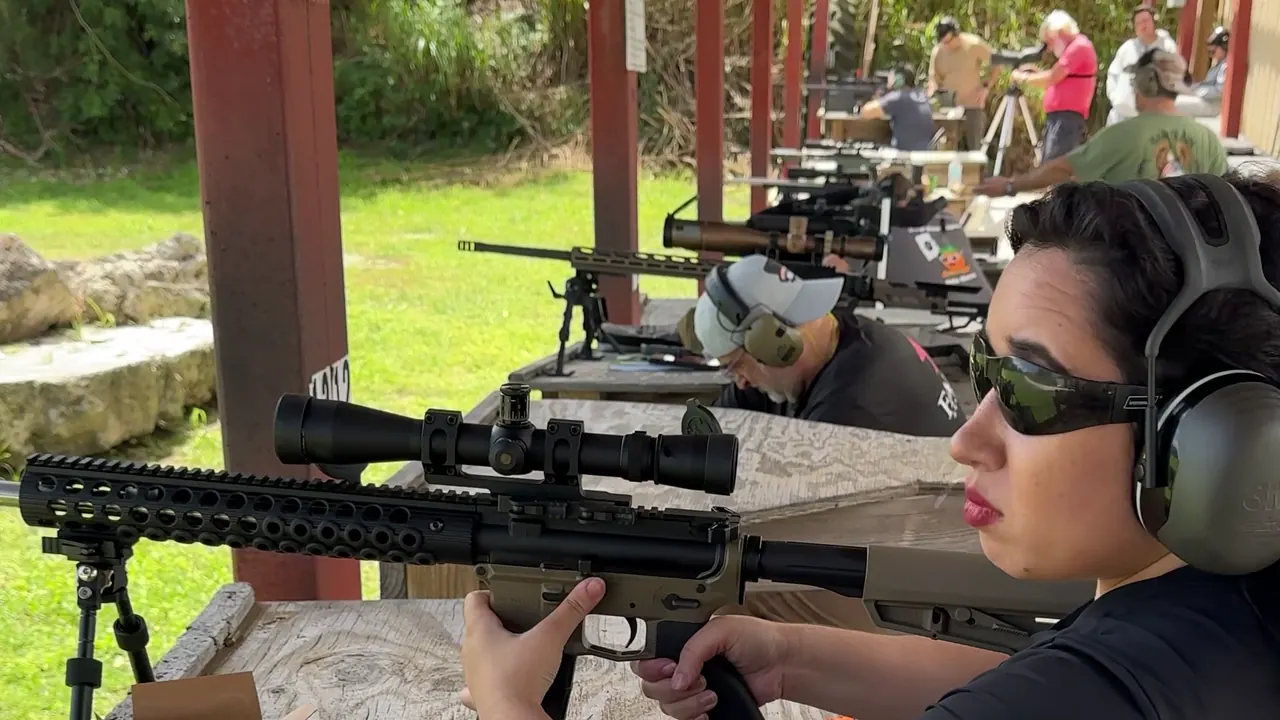
Keeping skills sharp after training
Keep your skills current with safe dry practice, regular range sessions, periodic professional refreshers, and current knowledge of Florida firearm and self-defense law. Practice only with a verified unloaded firearm in a safe setting, and use live ammunition only at an appropriate range.
When concealed carry becomes the next step
Concealed carry is a separate decision from owning a handgun. Before carrying, you should handle your firearm safely, understand its condition, and make lawful decisions without losing control of basic skills. When you are ready, choose the training route closest to you: Miami concealed carry training, Fort Lauderdale concealed carry training, or Palm Beach County concealed carry training.
A practical progression
Build capability in the right order
- Learn safe handling. Start with private training or Handgun Fundamentals.
- Build repeatable live-fire skill. Practice accurate shooting, reloads, and problem solving under qualified coaching.
- Prepare for lawful carry. Take the concealed-carry course that serves your area when you are ready.
- Continue beyond the certificate. The Concealed Handgun Tactics & Safety class adds decision-making and practical defensive skills after the foundation is solid.
Your safety starts now
You deserve instruction that prepares you for real-world responsibility, not a rushed experience or a generic script. Tactical U offers private handgun training in Miami, private pistol training in Fort Lauderdale, and foundational group instruction for South Florida students. Start where you are, then build forward.
Choose your next step
Start private, join a foundation class, or prepare for carry.
Questions women ask before their first firearm lesson
What should I bring to my first training session?
Bring photo identification, your firearm if you own one, a holster if applicable, magazines, ammunition, eye and ear protection, comfortable range-appropriate clothing, and closed-toe shoes. Ask when booking if you need equipment.
How long before I feel confident?
Many students improve after one structured course. Long-term confidence comes from consistent, safe practice and continued coaching.
Are there physical requirements?
Most foundational drills are accessible to many fitness levels, and training can be adapted to your needs.
How should I maintain my firearm?
Clean and inspect it after range use, paying attention to the barrel, slide, and moving parts. Follow the manufacturer’s instructions and ask for qualified help when you need it.
Train This Skill With Tactical U
Turn the idea from this article into coached reps with Tactical U.