(954) 637-2115

The McDaniels v. State decision clarified that Florida law now recognizes a right to openly carry firearms under certain circumstances.
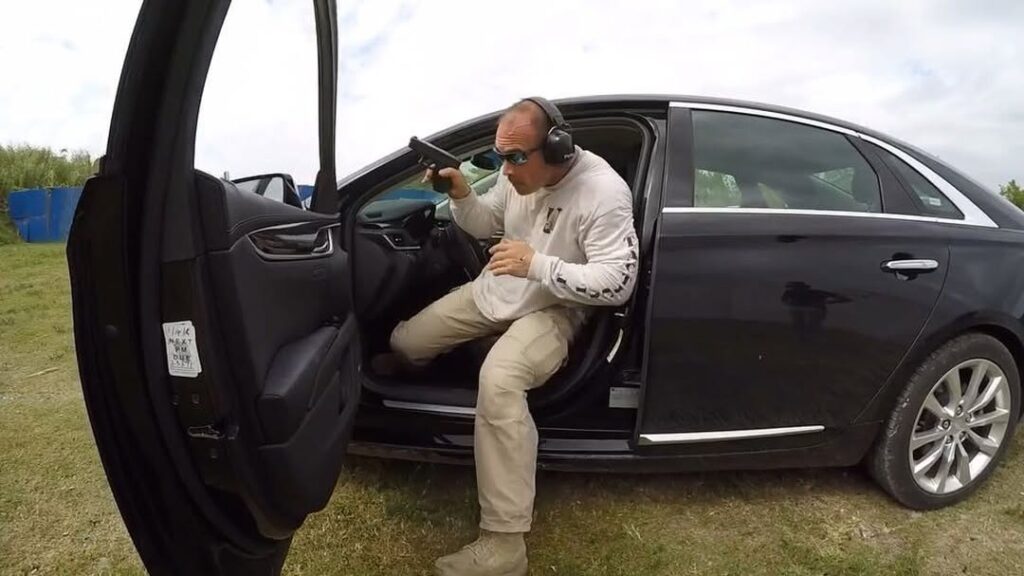
That sounds simple, until you put a gun in a car. Vehicle carry has always been a gray area where federal law, state law, and local enforcement overlap.
One wrong assumption about where or how your firearm sits can turn a routine stop into a felony arrest. At TacticalU we try and cut through the noise. Here’s how to navigate it responsibly.
The reliable way to stay compliant is to understand the rules cold, which is a large part of Florida concealed weapon license training.
1. Understand What McDaniels Actually Did
The McDaniels case didn’t wipe away Florida’s transport restrictions.
It simply affirmed that open carry is constitutionally protected under Article I, Section 8 of the Florida Constitution, subject to “reasonable regulation. ”That phrase, reasonable regulation , is where most of the trouble starts.
Florida Statute § 790.25(5) still governs firearms inside a “private conveyance.”
It requires that a handgun in a vehicle be securely encased and not readily accessible for immediate use unless you hold a valid CWFL.
So, while open carry is recognized in principle, carrying a gun in plain view inside your vehicle can still violate 790.25(5) depending on how it’s staged.
McDaniels changed nothing about the school zone rules that still apply, and that is where the arrests happen.
2. School Zones Remain Off-Limits
Federal law doesn’t care about the McDaniels ruling. Under the Gun-Free School Zones Act (18 U.S.C. § 922(q)), it remains a federal offense to possess a firearm within 1,000 feet of a school, whether it’s visible or concealed.
Florida piles on with § 790.115, banning firearms on school property, buses, and at school events.
Even a parked car with a firearm inside can trigger criminal exposure if it’s on school grounds.
Many counties, Miami-Dade, Broward, Polk, Hillsborough, have published policies stating that no firearms are allowed on any district property, including parking areas.
That means even a gun locked in your trunk could result in a state felony if discovered on-site.
Rule of thumb:
Avoid driving armed anywhere near a school unless your route leaves you no alternative, and even then, keep the firearm concealed and secured.
McDaniels changed nothing about the school zone rules that still apply, and that is where the arrests happen.
The age rules moved in June 2026, and the current position is set out in what changed for adults under 21.
3. Age Still Defines What You Can Do
Florida sets 21 as the minimum age for both open and concealed carry. Learn more about the benefits of a CCW in Florida here.
If you’re under 21, you can lawfully own and possess a handgun but not carry it, in public or in a vehicle.
Your only lawful configuration is one that meets § 790.25(5): securely encased and not immediately accessible.
Gun visible on the seat? Illegal.
Holstered at the hip while driving? Illegal. If you’re under 21, treat your firearm as cargo, not equipment.
The age rules moved in June 2026, and the current position is set out in what changed for adults under 21.
4. Private Property and “No Firearms” Notices
Florida Statute § 790.251 protects the right to keep a firearm inside a locked vehicle on private property, but that protection ends at the door.
If a business owner or property manager tells you firearms aren’t permitted and you refuse to comply, you’re not exercising a constitutional right, you’re committing armed trespass § 810.08, which carries up to five years in prison.Respect private property rights.
Conceal or leave if asked. Arguing your case in a parking lot is a fast way to lose both your firearm and your license.
5. The “Car = Castle” Myth
Florida’s castle doctrine protects the use of force in self-defense while inside your vehicle, it does not override transport laws or justify open display.
Think of it this way: the doctrine governs what happens during a threat, not how you stage the weapon beforehand.
You can be justified in a defensive shooting and still be charged for unlawful open carry depending on how the gun was carried leading up to that event.
How to Stay Compliant

Know the statutes:
790.25(5), 790.115, 810.08, 790.251, and the federal 18 U.S.C. § 922(q).
Store correctly:
Glove box, latched container, or snapped holster, not exposed on the seat or console.
Plan routes:
Avoid schools and government facilities.
Keep hands visible during stops.
Don’t touch the weapon.
If you’re under 21:
Don’t carry at all, transport only.
Respect private property rules:
A posted “no firearms” sign ends the conversation.
The reliable way to stay compliant is to understand the rules cold, which is a large part of Florida concealed weapon license training.
The Real Takeaway
The McDaniels ruling expanded recognition of open carry in Florida, but it didn’t erase the maze of statutes that surround vehicle transport. Learn more about open carry laws in Florida here.
Freedom without precision gets people charged.
Understanding the interplay between state authorization, federal prohibition, and local enforcement is what keeps you safe, and out of court. Train accordingly.
Carry smart. Know the law better than the people enforcing it.,
Stephen L. Cohen
Tactical U Firearms Training, Homestead, FL
www.TacticalU.com
Train This Skill With Tactical U
Turn the idea from this article into coached reps with Tactical U.