
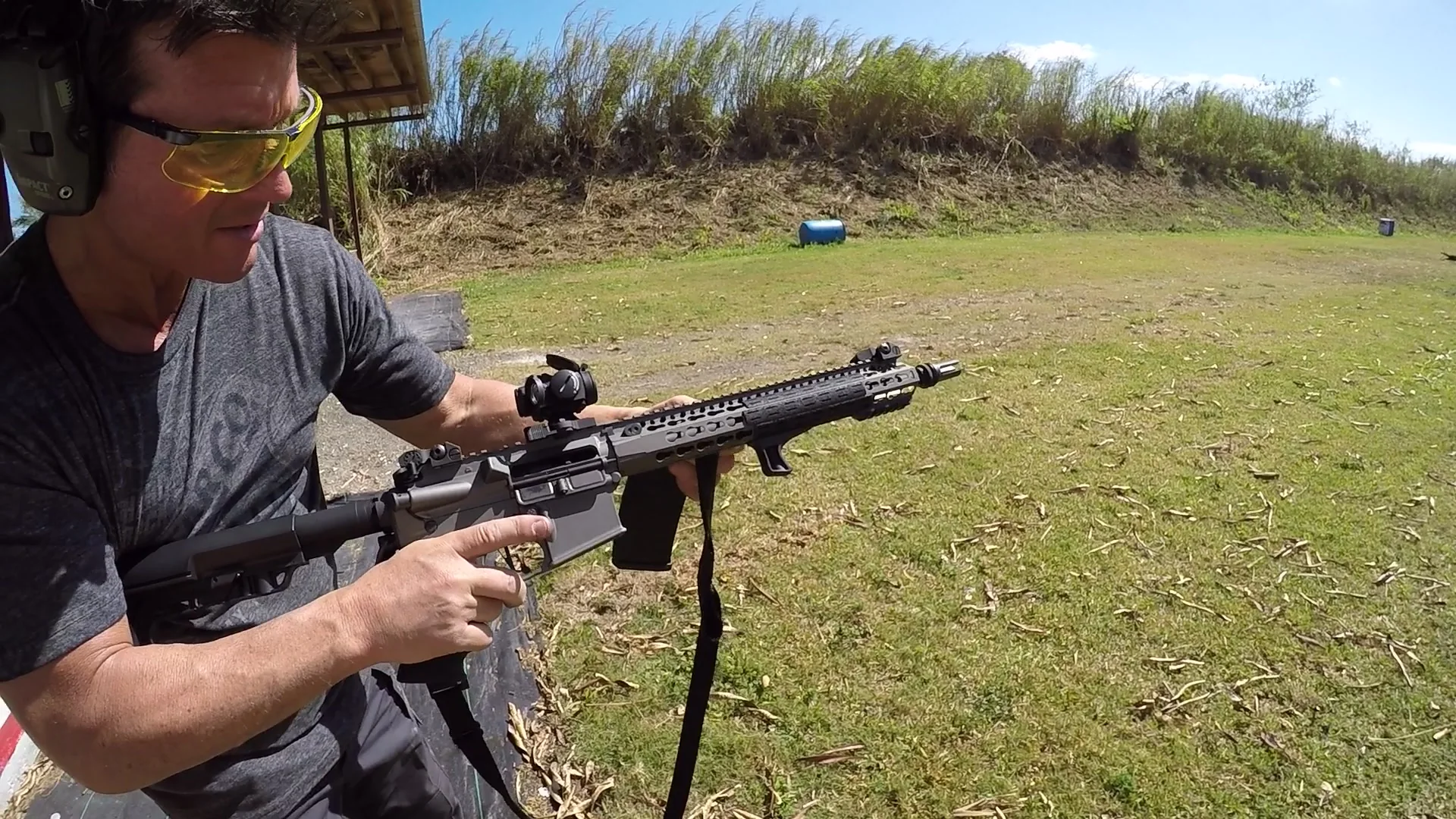
Short answer: for suppressors, short-barreled rifles, short-barreled shotguns and AOWs, the ATF says it will not enforce federal registration right now. But Congress has not repealed the registration law, the court ruling behind all this protects only the people in that lawsuit, and Florida’s felony statute has not changed. I am Stephen L. Cohen, a 32-year law enforcement veteran and NRA Law Enforcement Certified Firearms Instructor, and this is what every owner should understand before acting on the news.
Quick answer
You can now. That does not mean you should.
In 2026 the federal tax on these four item types dropped to $0, a federal judge in Texas ruled that registration cannot be enforced against the people in that case, and the ATF said it will stop enforcing registration for everyone. None of that came from Congress repealing the National Firearms Act. A policy can be reversed by the next administration. Florida law still makes an unregistered short-barreled rifle or shotgun a felony unless it is lawful under federal law, and no Florida court has said what that means today.
Law checked October 28, 2026
On this date we read the August 5, 2026 court opinion, the current text of 26 U.S.C. 5811 and Florida Statute 790.221, and read the ATF’s October 9, 2026 guidance page and its questions and answers (last updated October 16). This is moving fast. Check the current ATF and court pages before you act. This article is educational and is not legal advice.
What Congress Actually Changed
On July 4, 2025, Congress passed the One Big Beautiful Bill Act. Section 70436 cut the federal tax to make or transfer a suppressor, a short-barreled rifle, a short-barreled shotgun or an AOW (any other weapon) from $200 to $0, starting January 1, 2026. Machine guns and destructive devices still carry the $200 tax.
The House version would also have taken suppressors and short-barreled guns out of the NFA entirely. That language was stripped out in the Senate. What passed was the tax cut, and only the tax cut. The registration law, the approval forms, the 1986 machine gun ban and the penalties stayed in the statute word for word. The penalty for an unregistered NFA firearm is still up to 10 years in federal prison, and under the general federal fine statute, a fine of up to $250,000.
What the Court Did, and Who It Protects
The NFA has always rested on Congress’s power to tax. On August 5, 2026, in Silencer Shop Foundation v. ATF, Judge James Wesley Hendrix of the U.S. District Court for the Northern District of Texas ruled that once the tax is $0, the taxing power can no longer support registration and approval for those four item types. He did not decide the Second Amendment claims.
Read the scope carefully. The order protects the plaintiffs: the groups and companies that sued, their members and customers, and the agencies of 15 states. The judge refused to extend it to everyone. Florida is not one of the 15 states. The Department of Justice defended the NFA in court, lost, and then chose not to appeal, so the ruling is final for those parties. It is still one district court decision. No appeals court has ruled on this question, and similar cases are pending in Missouri and Kentucky. Florida has reportedly joined the Missouri case, which has not been decided.
What the ATF Did on October 9
On October 9, 2026, the ATF announced that, as a matter of enforcement discretion, it will not enforce NFA registration, approval or tax stamp requirements for suppressors, short-barreled rifles, short-barreled shotguns and AOWs. That is a policy decision. It is not a statute, and it is not a court order.
The ATF says the items are still firearms under federal law, and you can still register them voluntarily. Here is what still applies, even under that policy:
- Background checks and the Form 4473 when you buy from a dealer.
- ATF approval on Form 5320.20 before you take a short-barreled rifle or shotgun across state lines.
- Every NFA rule for machine guns and destructive devices.
- State and local law, including Florida’s.
The ATF also put its own warnings on the policy. It can end. If enforcement comes back, unregistered items are not automatically grandfathered. An item taken off the registry cannot be put back without an amnesty. The guidance does not override state and local laws, and the ATF says it cannot say whether its policy makes an item lawful for state law purposes. The court ruling itself does not bind other courts.
What Florida Law Still Says
Florida Statute 790.221 makes it a second-degree felony to own or possess a short-barreled rifle, short-barreled shotgun or machine gun. The exception is firearms “lawfully owned and possessed under provisions of federal law.” The legislature has not touched that section since 1997.
So the Florida question is simple to ask and hard to answer: is a short-barreled rifle that was never registered, held only because the ATF chose not to enforce, “lawfully owned and possessed under provisions of federal law”? Not enforcing a law is not the same as the law saying something is legal. No Florida court has ruled. The only prosecutor guidance we found covers six counties in north-central Florida, not Miami-Dade, Broward or Palm Beach, and we found no statement from the Florida Attorney General or FDLE as of today. Florida has no separate law that bans or licenses suppressors.
If you live in South Florida and build or buy an unregistered short-barreled rifle on the strength of an ATF letter, you are betting your freedom on a question no Florida court has answered.
Opinions Change. Only Congress Changes the Law.
An ATF guidance letter tells you how one agency plans to use its resources. An Attorney General’s position is the position of one Department of Justice under one president. Those positions change from one administration to the next. The Attorney General who set up this administration’s Second Amendment task force in April 2025 was out of the job a year later. The next administration can rescind the October letter with another letter.
The National Firearms Act has been law since 1934. The Supreme Court upheld it as a tax in 1937. When the Court found a self-incrimination problem in its registration system in 1968, Congress did not throw the law out. It rewrote the registration rules in the Gun Control Act that same year. In 1986, Congress closed the machine gun registry to new civilian guns. Through Democratic and Republican administrations, for more than 90 years, Congress has never repealed it. Even in 2025, with the votes to cut the tax, the provisions that would have taken suppressors and short-barreled guns out of the NFA did not survive.
What changed in 2026 came from a $0 tax, one district judge and an enforcement letter. Not one word of the registration law was repealed.
You Can. That Does Not Mean You Should.
The law sets the minimum. Judgment has to carry you the rest of the way. Here is what to weigh before acting on the new policy.
- Policies end. If enforcement comes back, the ATF says there is no automatic grandfathering. Anything made or bought off the registry could need an amnesty that may never come.
- The registry is a one-way door. Take an item off and you may not be able to put it back.
- Travel rules still apply. A short-barreled rifle or shotgun still needs Form 5320.20 approval before it crosses a state line.
- Florida is unsettled. The state felony exception depends on federal law, and nobody with authority in South Florida has said what that means today.
- Everything gets examined afterward. If you are ever involved in a defensive shooting, every firearm you own, every document and every decision you made becomes part of what I call the second fight. Clean paperwork is one less thing to explain.
- Your family inherits your choices. Items held in a trust, or left to heirs, need a structure that holds up under whatever the law is when they take possession.
What to Do Right Now
- Keep registered items registered, and keep your approved forms where you and your family can find them.
- Do not build or buy an unregistered short-barreled rifle or shotgun in Florida on the strength of an ATF letter alone. Get a written opinion from a Florida firearms attorney first.
- File Form 5320.20 before you take a short-barreled rifle or shotgun across a state line.
- If your items are held in a trust, review the trust and its responsible persons with your attorney.
- Watch the Missouri and Kentucky cases and the Florida Legislature’s 2027 session. That is where the next real change will come from.
Where Tactical U Fits
I am not your attorney, and this article is not legal advice. What Tactical U can do is help you see the whole picture before you talk to one:
- The Private NFA and Firearms Legal Architecture Assessment: a private session that maps what you own, how it is held, and the questions to take to your attorney.
- The Florida self-defense legal aftermath guide for what happens after a defensive shooting.
- Private precision rifle training and rifle training, if you want to run the rifle you own the right way.
Contact Tactical U
Questions about what you own?
Send Stephen a question or book a short call before you change anything.
Source and legal note
Primary sources used for this article
- Silencer Shop Foundation v. ATF, No. 6:25-cv-56 (N.D. Tex. Aug. 5, 2026), opinion
- 26 U.S.C. 5811, NFA transfer tax, as amended by Pub. L. 119-21
- 26 U.S.C. 5871, NFA penalties and 18 U.S.C. 3571, federal fines
- ATF, Update to NFA Transfer Guidance (October 9, 2026)
- Florida Statutes, section 790.221
Educational information only. It is not legal advice. Laws, court orders and agency policies change. Confirm your situation with a Florida firearms attorney before you act.
NFA 2026 FAQ
Do I still need a tax stamp for a suppressor in 2026?
The federal tax is gone for now. Since January 1, 2026, the tax to make or transfer a suppressor, short-barreled rifle, short-barreled shotgun or AOW has been $0. Machine guns and destructive devices still carry the $200 tax.
Did a court strike down the NFA?
Not the whole law, and not for everyone. On August 5, 2026, a federal judge in Texas ruled in Silencer Shop Foundation v. ATF that registration and approval cannot be enforced for the $0 items against the parties in that case. The Department of Justice did not appeal. The statute is still on the books, and no appeals court has ruled.
Does the ATF still enforce registration for suppressors and SBRs?
Not right now. On October 9, 2026, the ATF said it will not enforce NFA registration and approval for suppressors, short-barreled rifles, short-barreled shotguns and AOWs, as a matter of enforcement discretion. The ATF itself says enforcement could resume, and that its guidance does not override state and local laws.
Is an unregistered short-barreled rifle legal in Florida?
No Florida court has said. Florida Statute 790.221 makes owning a short-barreled rifle, short-barreled shotgun or machine gun a second-degree felony unless it is lawfully owned and possessed under federal law. Whether the ATF choosing not to enforce counts as lawful under federal law is unresolved. Talk to a Florida firearms attorney before you rely on it.
Can I take my short-barreled rifle across state lines without approval?
Not yet. Federal law still requires ATF approval on Form 5320.20 before you move a short-barreled rifle or shotgun across state lines. A proposal to change that is not final. That rule does not apply to suppressors.
Should I take my registered items off the NFA registry?
Think hard before you do. The ATF says an item removed from the registry cannot be put back without an amnesty, and an amnesty is up to the Attorney General. If enforcement comes back, a registered item and its paperwork are the cleanest proof that you owned it lawfully.
Map What You Own Before You Change Anything
Bring your questions and paperwork to a private session with Stephen, then take a clear list to your attorney.