THE TACTICAL U STANDARD
Solving the Obstacle
We evaluate the draw by survivability, not speed.
The Myth of the Passive Garment
Most shooters train as if their concealment garment does not exist. On the range, they wear light clothing and rehearse a draw that assumes the fabric will always move out of the way.
In reality, concealment is the first physical obstacle that must be defeated before the firearm can even be accessed.
At Tactical U, we treat concealment as an active obstruction that requires a deliberate, mechanical solution. If concealment is not decisively cleared, the draw fails before it begins.
Clothing Is a Mechanical Variable
The garment you wear directly affects the reliability of your draw. Different clothing types introduce different failure modes.
Fabric Weight
Light fabrics flutter and fall back over the grip. Heavier fabrics require more force to clear but are more likely to remain displaced once moved.
Elasticity
Stretch fabrics bind against the holster and grip, creating snag points that interfere with access and extraction.
The Tail Effect
Long garments are frequently trapped between the hand and the grip during Phase 2, fouling the master grip before the firearm clears the holster.
These are not comfort issues.
They are mechanical problems.
Appendix Carry: Geometry, Body Type, and Holster Reality
Appendix inside-the-waistband (AIWB) carry fundamentally changes the mechanics of access. Unlike strong-side carry, appendix carry places the firearm directly in front of the pelvis, where posture, body type, clothing, and holster construction exert constant pressure on the system.
This makes appendix carry less forgiving and more sensitive to mechanical variables.
Body Type Is a Mechanical Variable
Pelvic tilt, abdominal mass, torso length, and spinal posture directly affect grip exposure and clearance space. A grip that appears accessible while standing upright may be partially or completely buried when seated, bending forward, or moving dynamically.
When the body collapses space around the grip, Phase 2 fails before the draw begins.
Clothing Geometry Matters
Appendix carry is highly sensitive to garment length, elasticity, and cut. Short shirts, stretch fabrics, and tapered garments increase the likelihood of fabric collapsing over the grip during Phase 1.
When the garment does not remain clear, the shooter never establishes a true master grip.
Holsters Are Mechanical Devices, Not Accessories
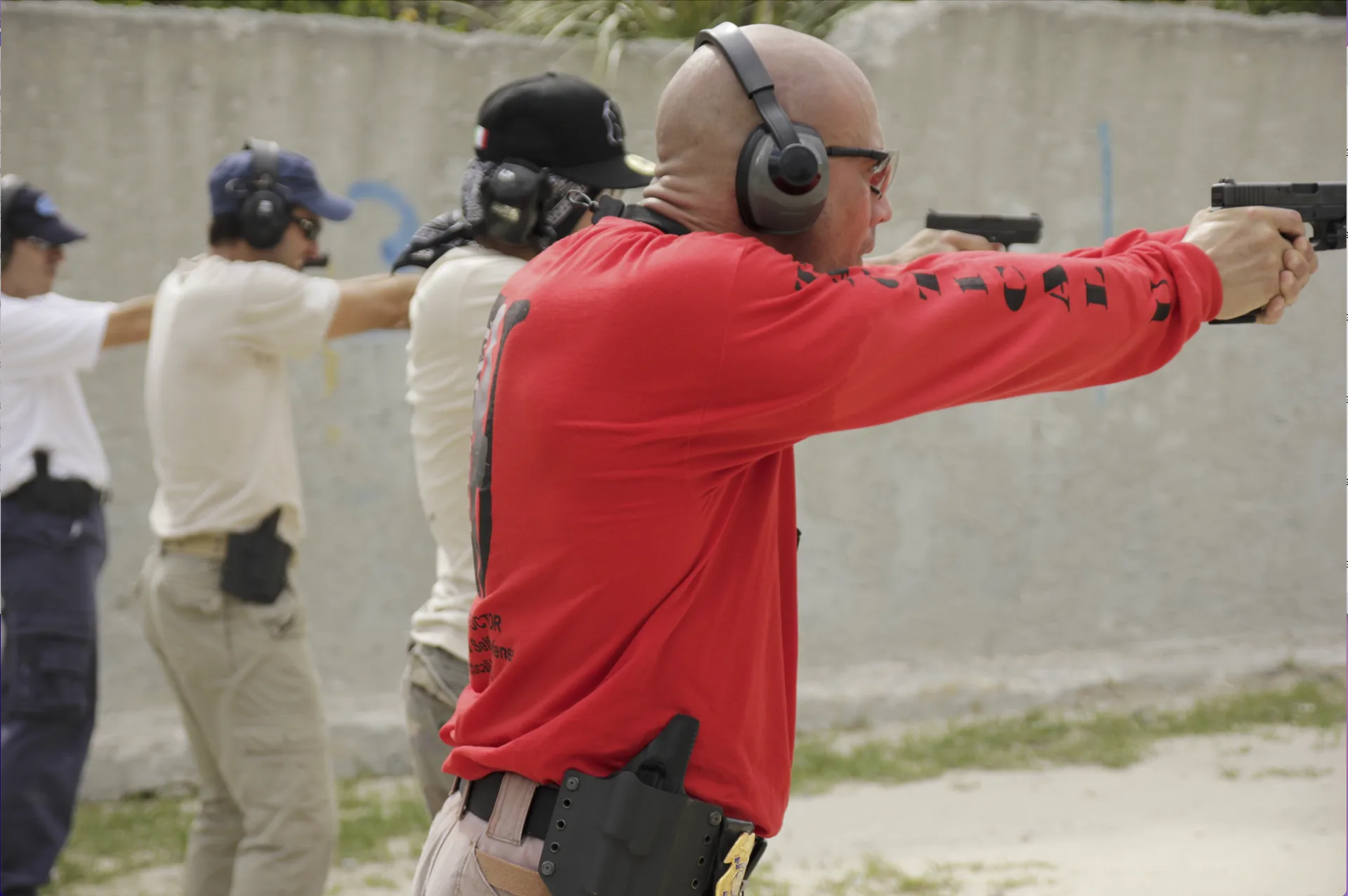
Not all holsters support reliable appendix access. Ride height, cant, wedge design, belt interface, and material rigidity determine whether the grip remains accessible or is driven inward under belt pressure.
A holster that shifts, collapses, or rotates under load introduces failure before Phase 2 begins.
At Tactical U, appendix carry is evaluated mechanically, not stylistically.
If body position, clothing, or holster design prevents a consistent master grip under posture change and movement, the carry method is mechanically unsound,regardless of comfort or popularity.
Diagnostic Tie-In
In appendix carry, the majority of draw failures originate in:
- ● Phase 1 (Clear), garment collapse or incomplete clearance
- ● Phase 2 (Master Grip), grip compression or interference
These failures occur before speed is even a variable.
Environmental Friction: Seated and Vehicle Draws

Vehicles
Seatbelts, door frames, steering wheels, and center consoles are structural barriers. If you have not practiced clearing concealment while seated and restrained, your draw time is irrelevant.
Compressed Posture
Corners, entanglement, ground fighting, and confined spaces collapse leverage and restrict movement. In these environments, Phase 1 often fails long before speed becomes a factor.
Environmental friction exposes whether your draw mechanics are robust or fragile.
Mastering the Clear (Phase 1)
The clear must be the most aggressive part of the draw sequence.
A tentative clear is a failed clear.
High Index
The garment must be lifted high enough to fully expose the holster and grip,not merely brushed aside.
Clearance Confirmation
The hand must confirm that the garment is clear before establishing the master grip. Rushing this step traps fabric under the palm and guarantees downstream failure.
Nearly all concealment-induced draw failures originate in Phase 1.We ask:
- Did the garment stay clear?
- Did the clear survive movement and posture change?
- Did the draw remain linear under obstruction?
If concealment defeats access, the draw has already failed,regardless of how fast it looks on a timer.
Initial Exposure & Validation
Environmental failure cannot be understood conceptually.
It must be experienced under supervision.
Initial Exposure & Validation
The Concealed Carry 4-Hour Private provides the first supervised environment where most shooters encounter real concealment friction. Students routinely discover:
- Garment collapse during movement
- Missed or compromised grips
- Posture-induced access failures
- Unsafe or instinctive corrections
This course does not teach concealment nuance or advanced draw mechanics.
It exposes failure and establishes accountability.
Concealed Carry 4-Hour Private
Advanced Environmental Validation
Concealment management, posture change, and environmental obstruction are pressure-tested and corrected at higher levels.
Concealed Handgun Tactics & Safety
Cover & Concealment Masterclass
Author
Stephen L. Cohen
Founder & Lead Instructor, Tactical U Firearms Training
Operating in South Florida since 2010, Stephen L. Cohen is a law-enforcement-certified firearms instructor with over three decades of experience training law enforcement, military, security professionals, and responsible armed civilians in technical weapon handling, decision-making under stress, and post-incident risk management.
Continue Reading
Train This Skill With Tactical U
Turn the idea from this article into coached reps with Tactical U.