
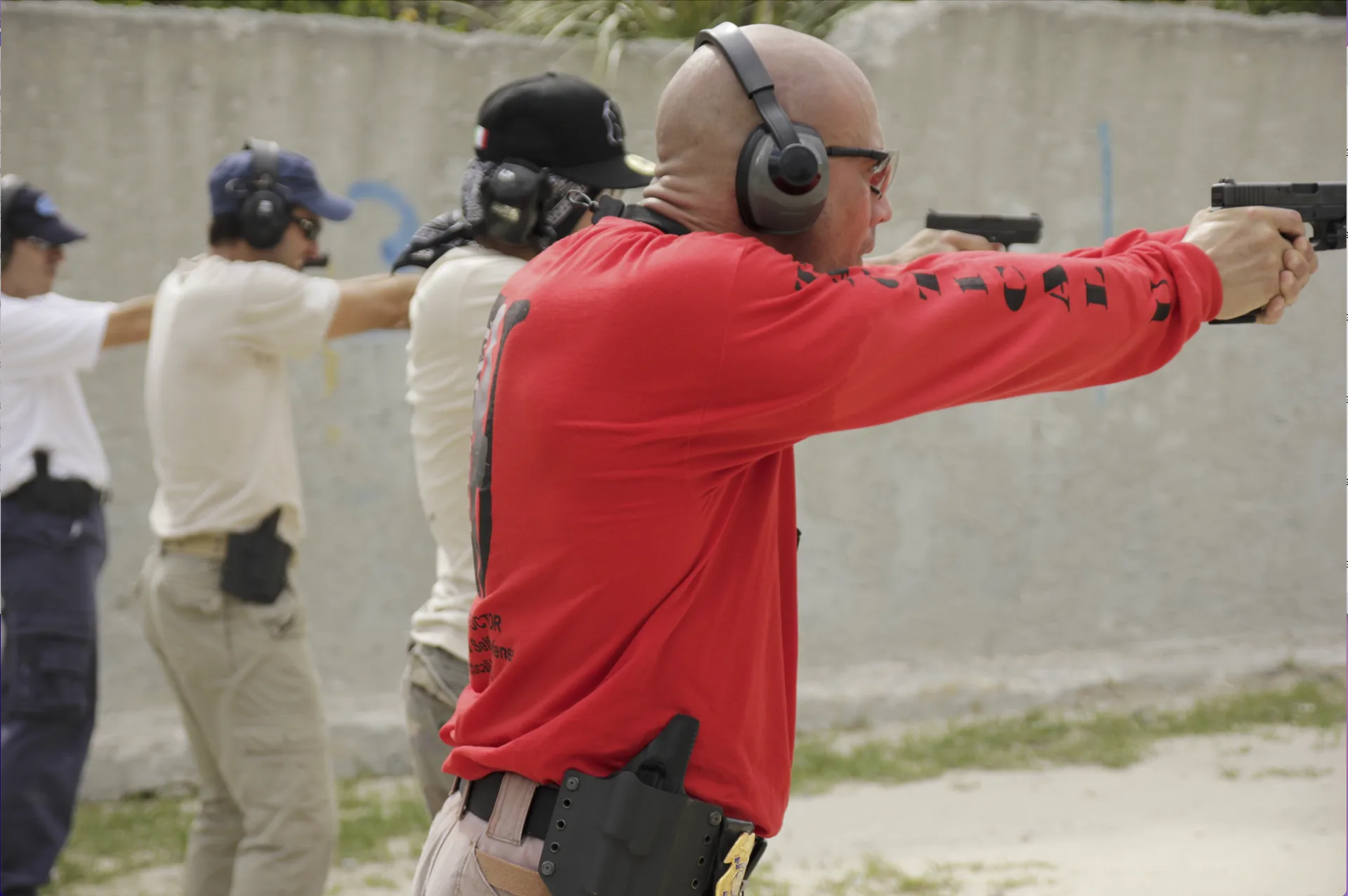
Students ask me the same question before every Florida concealed weapon license class: what do I need to bring? Here is the exact list I give my own students, with honest guidance on what matters and what does not. I am Stephen L. Cohen, a 32-year law enforcement veteran and NRA Law Enforcement Certified Firearms Instructor, and this is the list I have refined over hundreds of classes.
Quick answer
Bring a photo ID, a working handgun, 50 rounds of factory ammunition, ear protection, and eye protection. For the 2-hour class, bring at least one spare magazine; two are preferred. For the 4-hour class, also bring a holster and magazine pouch. Everything else is comfort.
Those five items are the base requirements. The session you booked adds the magazine and holster requirements below. If you do not own a handgun yet, do not buy one the night before class. Rental and loaner options exist, and taking the class first teaches you what actually fits your hand.
Students who do not own a handgun usually start with a private lesson using a loaner handgun before they buy anything.
Disclosure
Some links on this page are affiliate links through my Guns.com account. If you buy through them, Tactical U earns a small commission at no extra cost to you. I only point you at gear categories I actually tell my students to use, and nothing on this page is required to train with me.
Required: You Cannot Take the Class Without These
1. A valid government-issued photo ID. Driver’s license works. No ID, no certificate.
The requirements differ slightly between the two-hour class and the four-hour class, so check which one you booked.
2. A working handgun, revolver or semi-auto. The live-fire portion requires you to safely fire a handgun. If you own one, bring the one you actually plan to carry. If you do not own one yet, read the next section before you buy anything.
3. Ammunition for your handgun. Factory ammunition only, correct caliber. For a license class, a box of 50 is more than enough. Browse current ammunition prices if you cannot find your caliber locally.
4. Ear protection. Foam plugs meet the requirement. Electronic muffs are better because you can hear range commands with them on. Both live in the accessories section.
5. Eye protection. Impact-rated shooting glasses, not sunglasses. Prescription glasses count, though wraparound protection over them is better.
6. The equipment for the session you booked. If you are using a semi-automatic pistol in the 2-hour class, bring at least one spare magazine; two are preferred. For the 4-hour class, also bring a secure holster made for your handgun and a magazine pouch. If you are using a revolver, confirm the equivalent loading setup when you book.
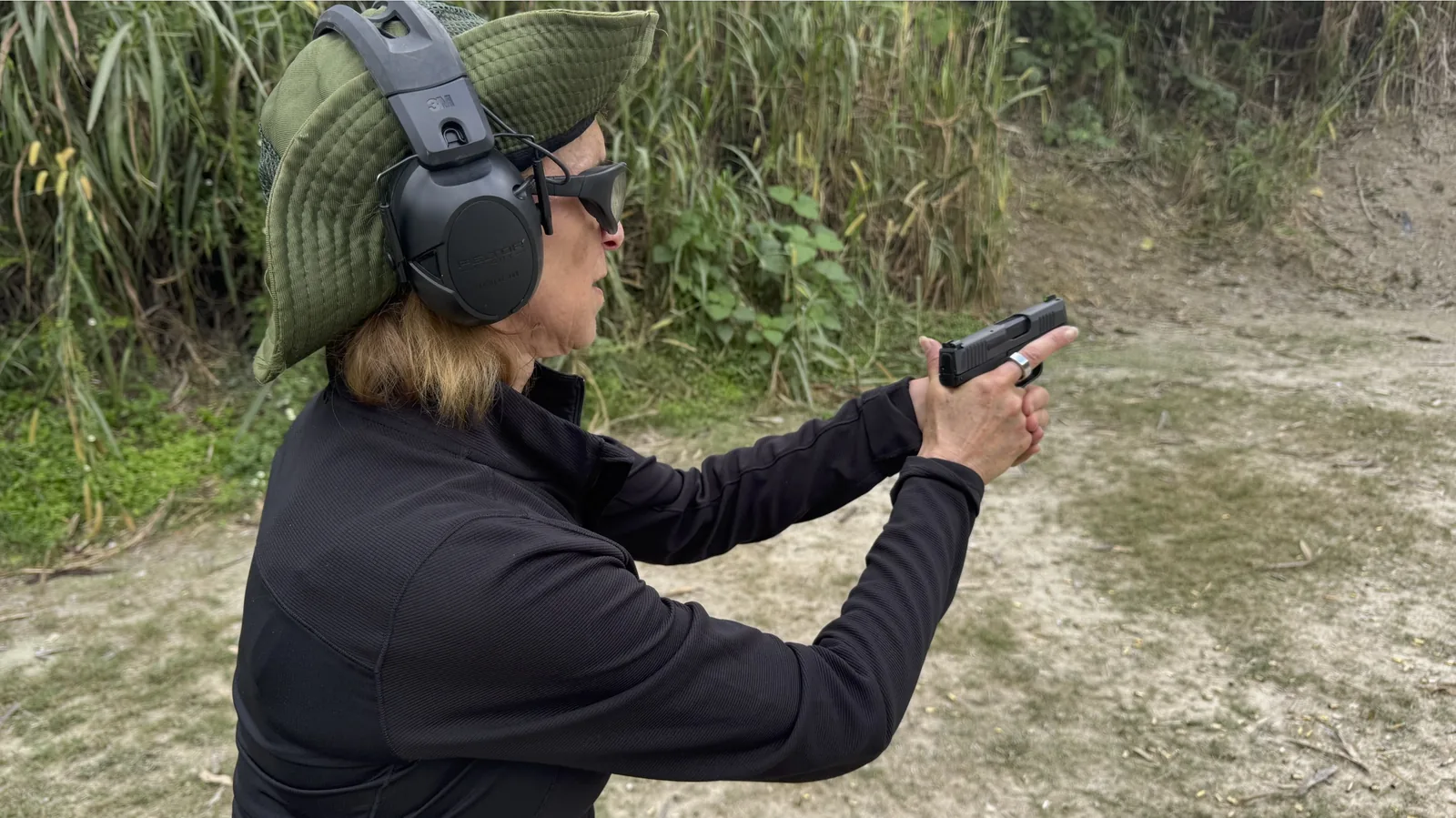
If You Do Not Own a Handgun Yet
Do not buy a gun the night before class. This is the single most common mistake I see.
Who should wait: if you have never fired a handgun, take the class first (rental and loaner options exist; ask when you book). The class will teach you what grip, trigger, and sights actually feel like, and THEN you will know what fits your hand.
Who is ready to buy: if you have shot before and know what fits, a quality 9mm from a major maker is the right first purchase for most people. Full-size guns are easier to shoot well; smaller guns are easier to carry and harder to shoot. That trade is real and nobody escapes it.
Where to look: Guns.com’s handgun listings include new and certified used guns with transfer to a local dealer. Used from a reputable source is a legitimate way to get a better gun for the same money. If you want my opinion for your specific hands, budget, and purpose, ask me at class; that advice is free and always will be.
Recommended: Makes the Day Better
- Closed-toe shoes (required on most ranges), a brimmed hat to keep brass off your face, and a long-sleeve shirt with a higher collar for the same reason.
- Water. South Florida ranges get hot.
- A pen and a notepad.
- A bag to keep it all together. Follow the exact course and range transport instructions provided for the class. Do not describe unloaded-and-cased transport as a universal Florida-law requirement.
Leave at Home
- Loaded magazines in the classroom. We load on the line, on command.
- Reloaded or hand-loaded ammunition.
- Anything you have not been told to bring. When in doubt, ask me first: (954) 637-2115.
The Gear Is the Small Part
The license class provides the training certificate used in the application process. The applicant must separately apply, meet every legal requirement, and receive the license from the state. What keeps you and your family safe is what you do after: real training under stress, with the gun you actually carry. When you are ready for that conversation, book a call or look at the full course list.
Stephen L. Cohen is the founder of Tactical U Firearms Training, serving Miami, Fort Lauderdale, and all of South Florida. 32 years in law enforcement (SWAT, federal task force, dignitary protection), NRA Law Enforcement Certified Firearms Instructor, and author of eight books.
Related Reading From Stephen L. Cohen
- Firearm safety training fundamentals
- The Florida concealed weapon permit, start to finish
- Florida concealed carry under 21 after Eubanks
- Open carry laws by state
The Eight Books, and Why They Are Here
Carrying a handgun is the smallest decision in a much larger one. These are the eight books I wrote about everything the gear list does not cover.
Related: the four-hour class.
- The Second Fight: the fight that begins when the shooting stops. Police interviews, prosecutors, civil court, and the years after. If you are about to start carrying, read this one first.
- Tactical Social Defense: reputation, employment, privacy, and family protection after a defensive incident.
- The Digital Perimeter: what you post makes you findable, and after an incident it becomes evidence. Privacy and exposure control for people who carry.
- Policy Risk Controls: continuity planning for account, platform, bank, and access disruption.
- The Hard Record: the record is what survives after the incident is over. Decision logs, evidence intake, chain of custody, retention, and disclosure, written so the documentation holds up under legal, HR, and public review.
- The Decision Owner: who owns the call, what may be delegated, when escalation is required, and how responsibility transfers cleanly. Buy here.
- When the Fix Fails: why corrective action fails, how to trace the real cause chain, test the fix, and prevent recurrence.
- Under Formal Review: how to handle audits, investigative interviews, findings, and remediation without making the record worse.
Frequently Asked Questions
What do I need to bring to a Florida concealed carry class?
A valid government-issued photo ID, a working handgun, factory ammunition in the correct caliber (a box of 50 is enough), ear protection, and eye protection. For the 2-hour class, bring at least one spare magazine; two are preferred. For the 4-hour class, also bring a secure holster and magazine pouch.
Do I need to own a gun to take the class?
No. Rental and loaner options exist. Taking the class before buying is usually the smarter order, because the class teaches you what actually fits your hand.
How much ammunition do I need?
A box of 50 rounds of factory ammunition in your handgun’s caliber covers the license class.
Tactical U runs concealed carry certification in Fort Lauderdale, North Miami, and West Palm Beach.