
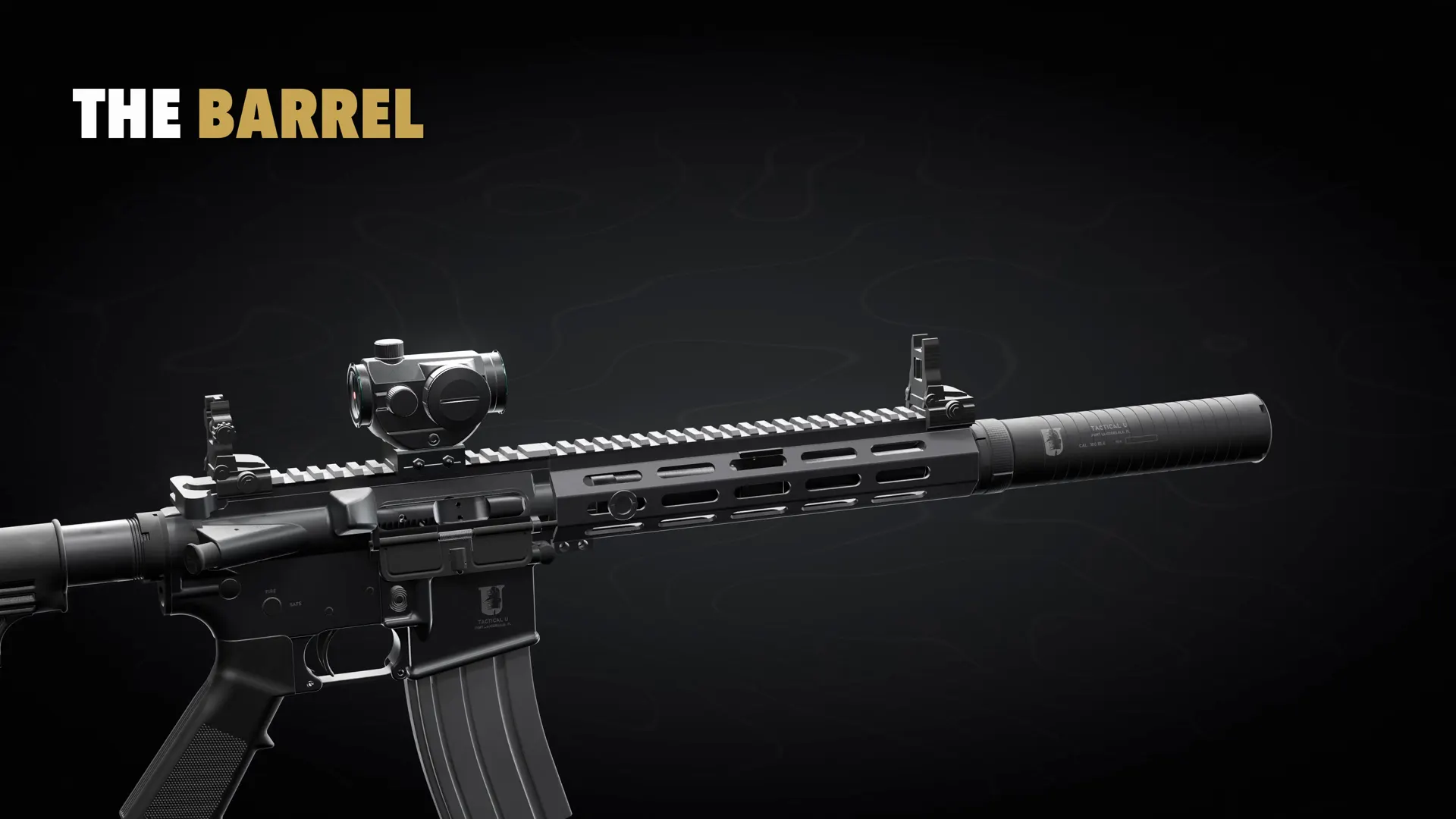
An AR-15 is two main halves: the upper receiver with the barrel and bolt carrier, and the lower receiver with the trigger, safety, magazine well and buffer tube. This entry names each major part and shows it working. It is part of the Tactical U Training Encyclopedia, with How an AR-15 Works.
Quick answer
Learn the parts before you need them.
If you can name a part, you can describe a problem with it. The film walks the rifle from the suppressor mount at the muzzle to the buffer spring in the stock, then locks the bolt open and sends it home.
The Parts, in Order
| Part | Where it is | What it does |
|---|---|---|
| Barrel | Under the handguard | Guides the bullet. Its gas port feeds the gas system. |
| Gas block and gas tube | On the barrel, under the handguard | Send gas from the fired round back to the bolt carrier. |
| Muzzle device and suppressor mount | End of the barrel | The muzzle device seats the suppressor; a locking collar screws it down tight. |
| Magazine release | Right side of the lower receiver | Press it and the magazine drops free. |
| Trigger and pistol grip | Lower receiver | Fire the rifle; the grip is where your firing hand sits. |
| Red dot and rear sight | Top of the upper receiver | Aim the rifle; the rear sight is the backup. |
| Charging handle | Top rear of the upper receiver | Pulls the bolt carrier back to load or clear the rifle. |
| Forward assist | Right side of the upper receiver | Pushes the bolt carrier forward to make sure it is locked. |
| Ejection port | Right side of the upper receiver | Where the empty case leaves the rifle. |
| M-LOK slots | Both sides of the handguard | Mounting points for lights and other accessories. |
| Safety | Left side of the lower receiver | SAFE blocks the trigger; FIRE lets it work. |
| Buffer, weights and buffer spring | Inside the buffer tube in the stock | Slow the carrier on the way back and drive it home. |
| Bolt catch and bolt release | Left side of the lower receiver | Hold the bolt open on an empty magazine, then send it home. |
The Upper Receiver
The upper holds everything that fires and cycles the round: the barrel, the gas block and gas tube under the handguard, the bolt carrier inside, the charging handle at the top rear, the forward assist and the ejection port on the right side. The red dot and rear sight mount on its top rail, and the M-LOK slots run along both sides of the handguard.
The Muzzle and Suppressor Mount
On the rifle in the film, a muzzle device on the barrel seats in the suppressor mount. A locking collar screws the suppressor down tight, and unscrewing the collar takes it off. Mounting systems differ by maker, and suppressors are regulated, so check the law where you live.
The Lower Receiver
The lower holds the controls your hands use: the magazine release, the trigger, the pistol grip, the safety and the bolt catch. The safety rotates from SAFE to FIRE and back. The magazine release drops the magazine free when pressed.
Inside the Buffer Tube
Behind the receiver, the buffer tube holds the buffer, its weights and the buffer spring. They slow the bolt carrier when it comes back after a shot, and the spring drives it home to feed and lock the next round. See the whole cycle in How an AR-15 Works.
The Bolt Catch and Bolt Release
With an empty magazine in, pull the charging handle and the bolt catch locks the bolt open. Press the bolt release and the bolt runs forward. On an AR-15 the catch and the release are the same lever on the left side of the lower.
More From the Tactical U Training Encyclopedia
This page is one entry in the Tactical U Training Encyclopedia, free training from Tactical U. Each entry answers one question with a short animated film, and each topic has one page:
- How an AR-15 Works: One magazine through the 8-step cycle, fired to empty, bolt locked back.
- AR-15 Zero Explained: How 25, 36, 50 and 100 yard zeros change the bullet path.
- Best AR-15 Red Dot Zero by Riser Height and Barrel Length: A best zero chart for common red dot mount heights and barrel lengths.
- Iron Sight Radius Explained: Why one sight click moves a carbine more than a 20 inch rifle.
- Rifle Marksmanship Fundamentals Explained: The seven fundamentals, from stance to follow-through.
Rifle Training That Covers This
A video shows how the rifle works. A class puts it in your hands, with an instructor watching. These Tactical U rifle pages cover rifle handling, malfunctions and zeroing:
- Tactical Rifle Fundamentals (Rifle Level 1): handling, loading, malfunction clearing and confirming your zero. Read its gear list first.
- Rifle Training Overview compares the Tactical U rifle classes in one place.
- Rifle Training in Fort Lauderdale covers the same carbine skills in its Phase 1 training.
What Students Say About Tactical U Rifle Instruction
From Google reviews of Tactical U classes. These reviews describe in-person training, not this video.
“The training is extremely comprehensive and goes deep into how a rifle actually works, while also covering a wide range of possible scenarios.”
“He explained in a logical sequence all aspects of safety, handling and operating the rifle.”
Transcript
Read the full transcript
The whole rifle
This is the whole AR-15. The barrel, gas block and gas tube sit under the handguard.
Muzzle and suppressor
Unscrew the locking collar to take the suppressor off. The muzzle device seats in the suppressor mount. The locking collar screws the can down tight.
Lower receiver
Press the mag release and the magazine drops free. Then the trigger and pistol grip.
Upper receiver
On the upper, the red dot and rear sight. The charging handle pulls the bolt back. Forward assist, ejection port. M-LOK slots on both sides. The safety: safe, fire, back to safe.
Buffer
Inside the buffer tube, the buffer and its weights. The spring drives the bolt carrier home.
Bolt catch
Empty mag in, pull the charging handle. The bolt catch locks the bolt open. Press the bolt release. It slams home. Know your rifle.
End
Tactical U. Train. Confirm. Document.
Limits of This Lesson
- The film shows one animated rifle. Part shapes, positions and accessories vary by maker and model.
- Part names follow common use. Your rifle’s manual is the authority for your rifle.
- Animated with AI.
Train This Skill With Tactical U
Confirm current availability, requirements and total cost before booking.
AR-15 Parts FAQs
What are the main parts of an AR-15?
An AR-15 has two main halves. The upper receiver holds the barrel, gas system, handguard, bolt carrier group, charging handle, forward assist and ejection port. The lower receiver holds the trigger, safety, magazine well, magazine release, bolt catch, pistol grip, buffer tube, buffer, buffer spring and stock.
What does the buffer do on an AR-15?
The buffer and buffer spring sit in the buffer tube behind the receiver. They slow the bolt carrier as it comes back after a shot, then the spring drives the carrier forward to feed and lock the next round. Weights inside the buffer help control that movement.
What is the forward assist for?
The forward assist is the button on the right side of the upper receiver. It pushes the bolt carrier forward to make sure the bolt is fully closed and locked. It is a check, not a fix for a dirty or damaged rifle.
What is the difference between the bolt catch and the bolt release?
On an AR-15 they are the same part on the left side of the lower receiver. Pressing the bottom of it while pulling the charging handle locks the bolt open. Pressing the top of it releases the bolt so it runs forward.
What is M-LOK?
M-LOK is a slot pattern cut into many AR-15 handguards. Lights, grips and other accessories bolt into the slots. In the film the slots run along both sides of the handguard.
How does a suppressor mount to an AR-15?
On the rifle in this lesson, a muzzle device on the barrel seats in the suppressor mount, and a locking collar screws the suppressor down tight. Unscrewing the collar takes the suppressor off. Other mounting systems work differently, and suppressors are regulated, so check the law where you live.